Acropolis of Athens Logo
English| EUR
Book Now
Open today · 08:00 – 20:00

Acropolis of Athens Tickets

Acropolis of Athens Tickets — Reserved Entry & Guided Ascents

Marble worn smooth by centuries, light that arrives first here.

4.8 /5 · 2,400 reviews
412K+ travelers chose this
Free Cancellation
Right now: Heavy — peak July weekday Arrive before 09:30 to beat midday heat and tour-bus crowds
2-3 hours recommended
1 Languages
Up to 20 guests
Free Cancellation
Free cancellation Instant confirmation Mobile voucher Verified partner Skip-the-line
2,500 yrs
Age of Acropolis
Built 447–432 BC
69.5x30.9m
Parthenon footprint
Length x width
13.72 m
Parthenon height
Top of pediment
4.5M+
Annual visitors
Record year 2024
20,000
Daily visitor cap
Since 2024, hourly slots
Choose your ticket

Acropolis of Athens tickets at a glance

Compare fares, pick the fit — all bookings are mobile-voucher and eligible for free cancellation where shown.

Acropolis Skip-the-Line Ticket with Optional Audio Guide or Live Tour
Guided Experience

Acropolis Skip-the-Line Ticket with Optional Audio Guide or Live Tour

4.2 (12362)
€36
  • Expert local guide
  • Small group
  • Skip-the-line access
Book this ticket
Acropolis & Parthenon Skip-the-Line Guided Tour 4 hr
Guided Experience

Acropolis & Parthenon Skip-the-Line Guided Tour

4.7 (6651)
€34
  • Expert local guide
  • Small group
  • Skip-the-line access
  • Free cancellation
Book this ticket
Compare options

Compare Acropolis of Athens ticket options

Experience DurationRatingSkip-the-lineGuideSmall groupFree cancel. Price
Guided Experience
Most popular
Acropolis, Parthenon & Acropolis Museum Guided Tour
4 hr★ 4.8 €34 Book →
Guided Experience
Acropolis Skip-the-Line Ticket with Optional Audio Guide or Live Tour
Flexible — self-paced entry★ 4.2 €36 Book →
Guided Experience
Acropolis & Parthenon Skip-the-Line Guided Tour
4 hr★ 4.7 €34 Book →

Are Acropolis of Athens Tickets Worth the Price

Worth it for nearly every Athens visitor

Acropolis of Athens Tickets cost 30 EUR for a standard adult, and the honest math favours paying. That single fee covers the whole rock: the Parthenon, the Erechtheion with its Caryatid porch, the Propylaea gateway, the Temple of Athena Nike and the Theatre of Dionysus on the southern slope. Priced separately, each of those Athens landmarks would justify an entry fee on its own. Compare it to the alternative — photographing the marble from Filopappou Hill for free, which gives you the silhouette and none of the scale. Where the value thins is if you arrive at midday in a summer crowd, or if you have already toured comparable UNESCO classical sites and want depth rather than the headline. Guided Athens Acropolis tour options and skip-the-line upgrades add cost on top. For first-timers, the εισιτήρια Ακρόπολης are the strongest 30 EUR in the city.

What makes it worth it

  • One fee covers Parthenon, Erechtheion, Propylaea, Theatre of Dionysus
  • Southern slope monuments included, not charged separately
  • Free viewpoints show silhouette only, never the scale
  • Open 08:00–20:00 every day, including weekends
  • 08:00–09:30 arrival beats crowds and summer heat

Keep in mind

  • 30 EUR per person adds up for groups
  • Midday summer crowds compress the marble walkways
  • Guided Acropolis of Athens Tickets tours cost extra on top
  • Little shade or shelter on the exposed rock

Bottom line: Buy the Acropolis of Athens Tickets tickets, walk up early, and let the free viewpoints be your encore rather than your visit.

Featured Experiences

Popular Acropolis of Athens tours & activities

Hand-picked experiences loved by thousands of travelers

Recommended Experience

Powered by GetYourGuide

Another traveler favorite

Powered by GetYourGuide
Athens: Early Access Acropolis & Parthenon Guided Tour 2 - 4 hours Free Cancellation

Athens: Early Access Acropolis & Parthenon Guided Tour

Beat the crowds and heat with first entry to the Acropolis and a licensed guide's tales of ancient Athens.

4.8 (2404)
FromFrom €34
See details
Athens: Acropolis and Mythology Small Group Walking Tour 2 - 4 hours Free Cancellation

Athens: Acropolis and Mythology Small Group Walking Tour

Uncover the myths behind the Acropolis and Ancient Agora on an intimate small-group walk.

4.8 (2627)
FromFrom €38.25
See details
Athens: Acropolis & Parthenon Guided Tour with Skip-the-Line Tickets 2 hours Free Cancellation

Athens: Acropolis & Parthenon Guided Tour with Skip-the-Line Tickets

Walk through 3,000 years of history with an expert guide and pre-reserved Acropolis tickets.

4.7 (2222)
FromFrom €30
See details
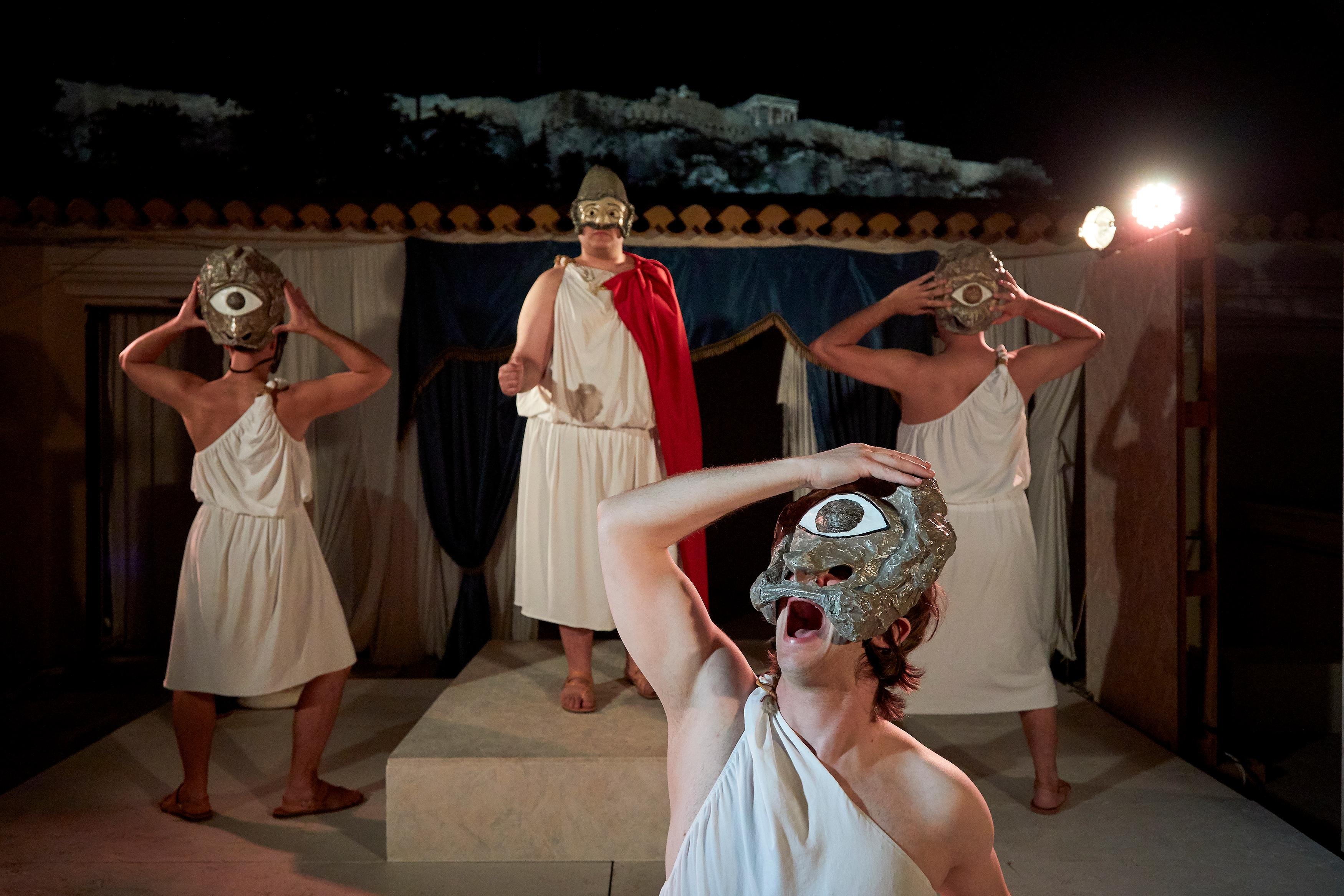
Athens Ancient Greek Theater Performance in Plaka 75 minutes Free Cancellation

Athens Ancient Greek Theater Performance in Plaka

A comic time-slip through Athenian myth, performed live in English steps from the Acropolis.

4.7 (3033)
FromFrom €30
See details
Acropolis & Ancient Agora Guided Walking Tour with Entrances Included 4 hours Free Cancellation

Acropolis & Ancient Agora Guided Walking Tour with Entrances Included

Skip the lines with a licensed guide through the Parthenon, Acropolis slopes, and Ancient Agora.

4.8 (393)
FromFrom €107
See details
Athens Hop-On Hop-Off Bus & Guided Acropolis Walking Tour 1 day (24-hour bus ticket + guided tour) Free Cancellation

Athens Hop-On Hop-Off Bus & Guided Acropolis Walking Tour

Explore Athens by open-top bus and uncover the Acropolis with an expert local guide, all in one day.

FromFrom €60
See details
Athens: Private Acropolis Tour with Licensed Archaeologist Guide 1.5 - 3 hours Free Cancellation

Athens: Private Acropolis Tour with Licensed Archaeologist Guide

Explore the Acropolis and Parthenon on a fully private tour with an expert licensed guide.

4.9 (74)
FromFrom €133
See details
Your journey

Your Acropolis of Athens day, step by step

1
Arrive at chosen entrance

Arrive at chosen entrance

Pass security and bag check at either the West Propylaea Gate or South Slope Dionysus Gate

2
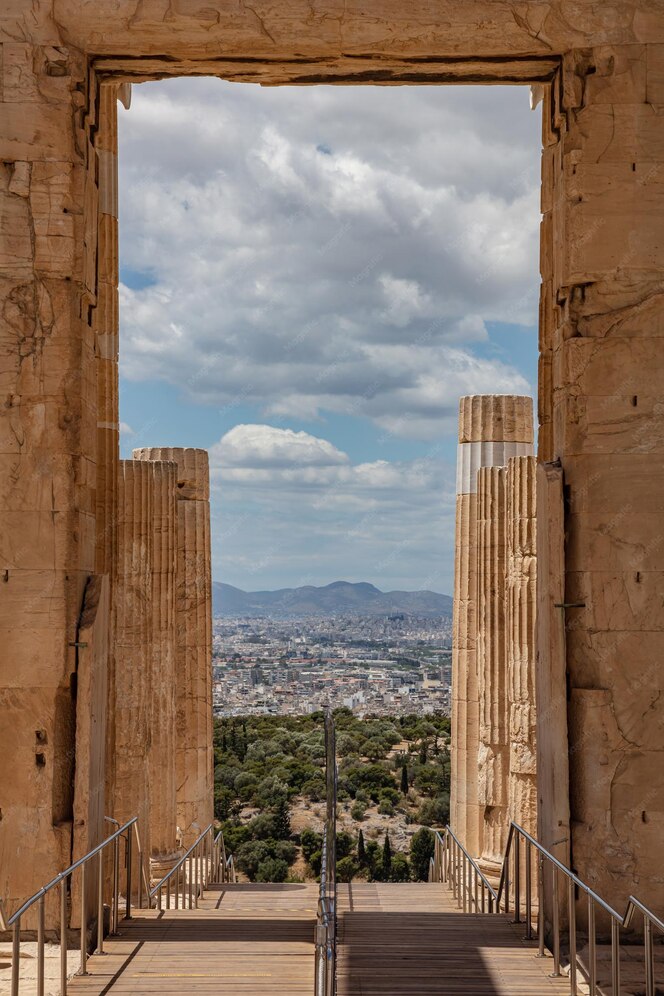
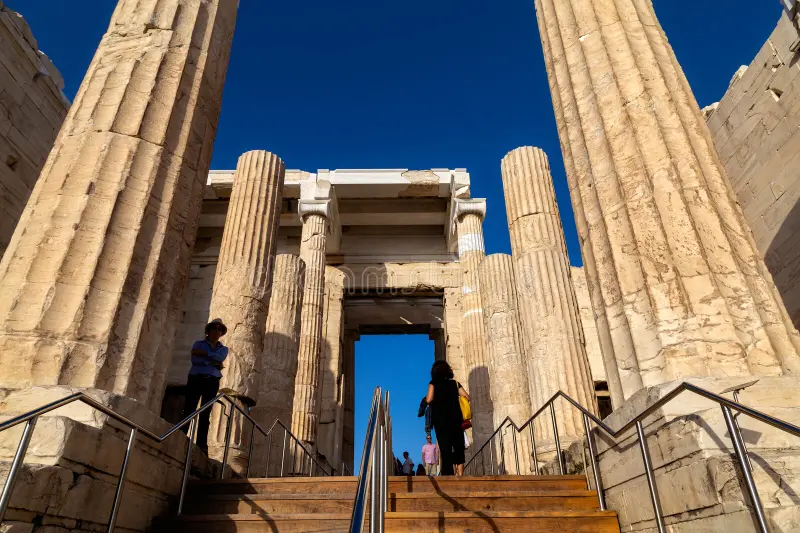
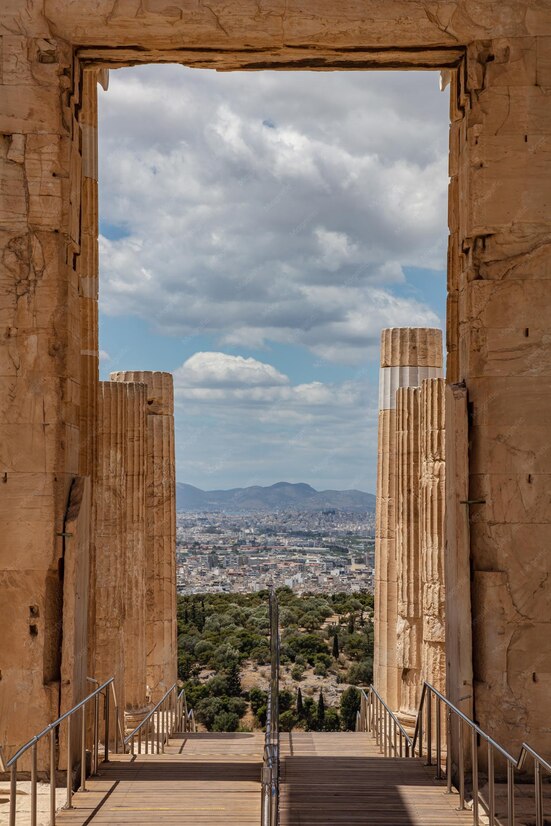
Ascend through the Propylaea

Ascend through the Propylaea

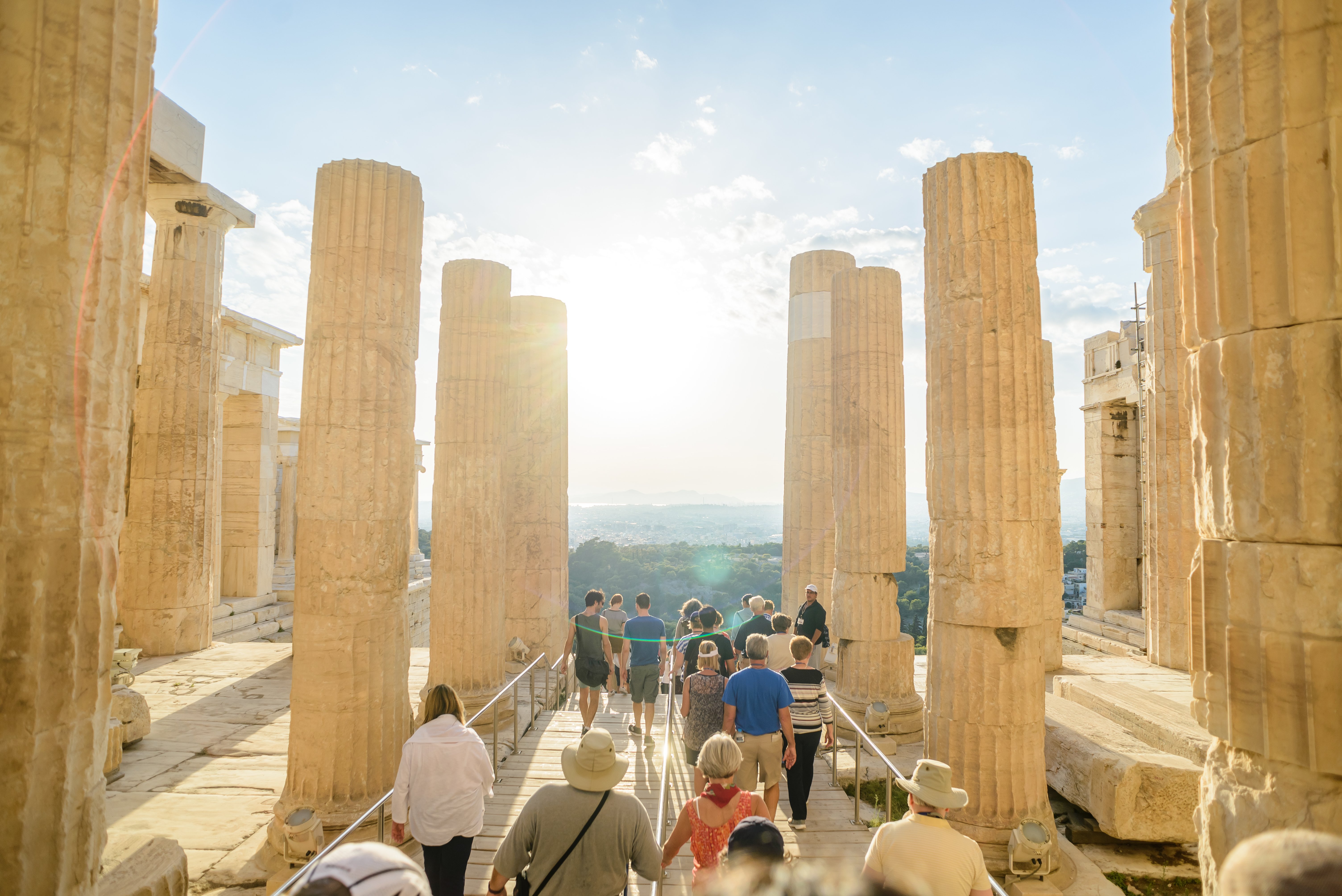
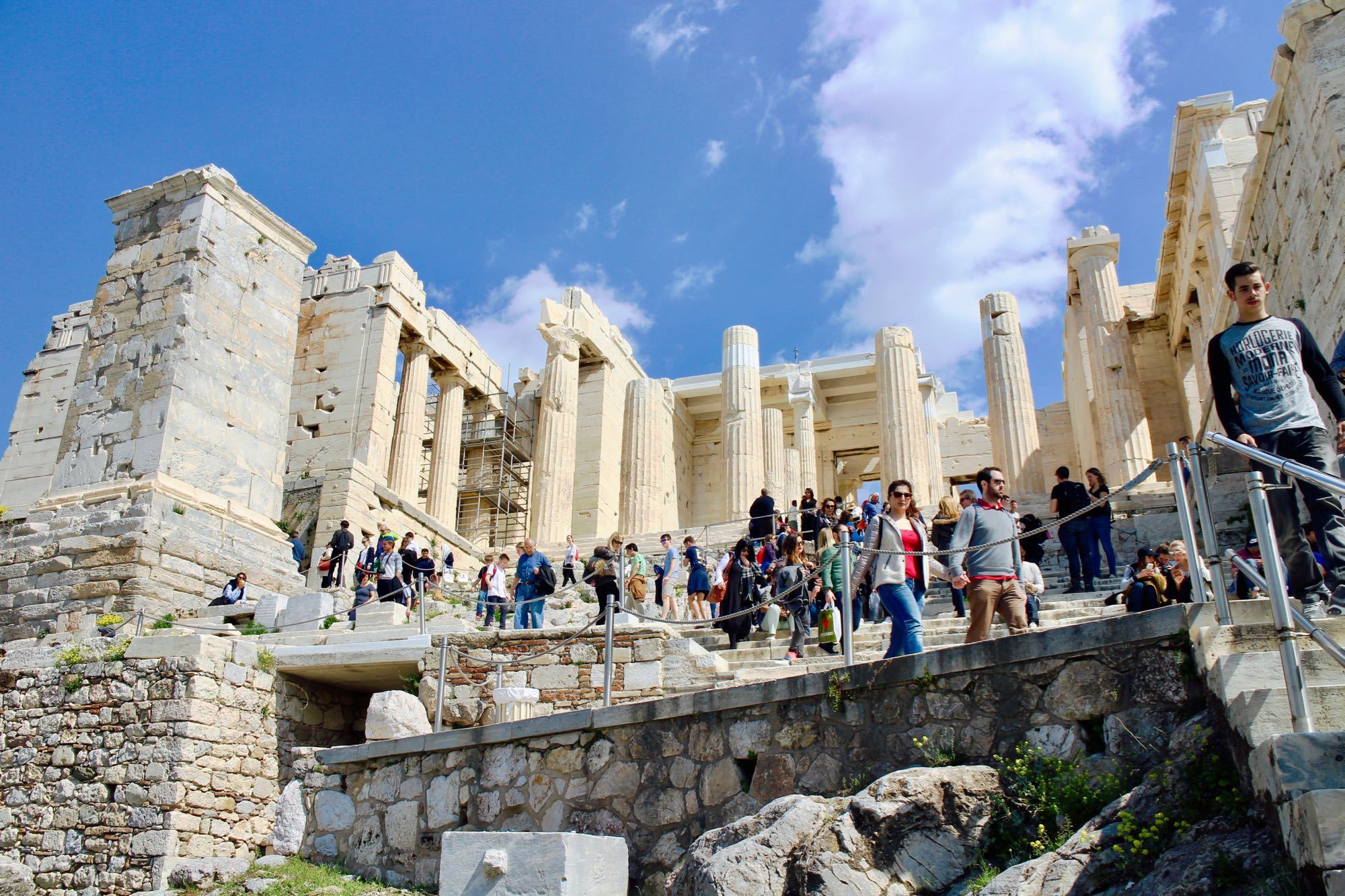
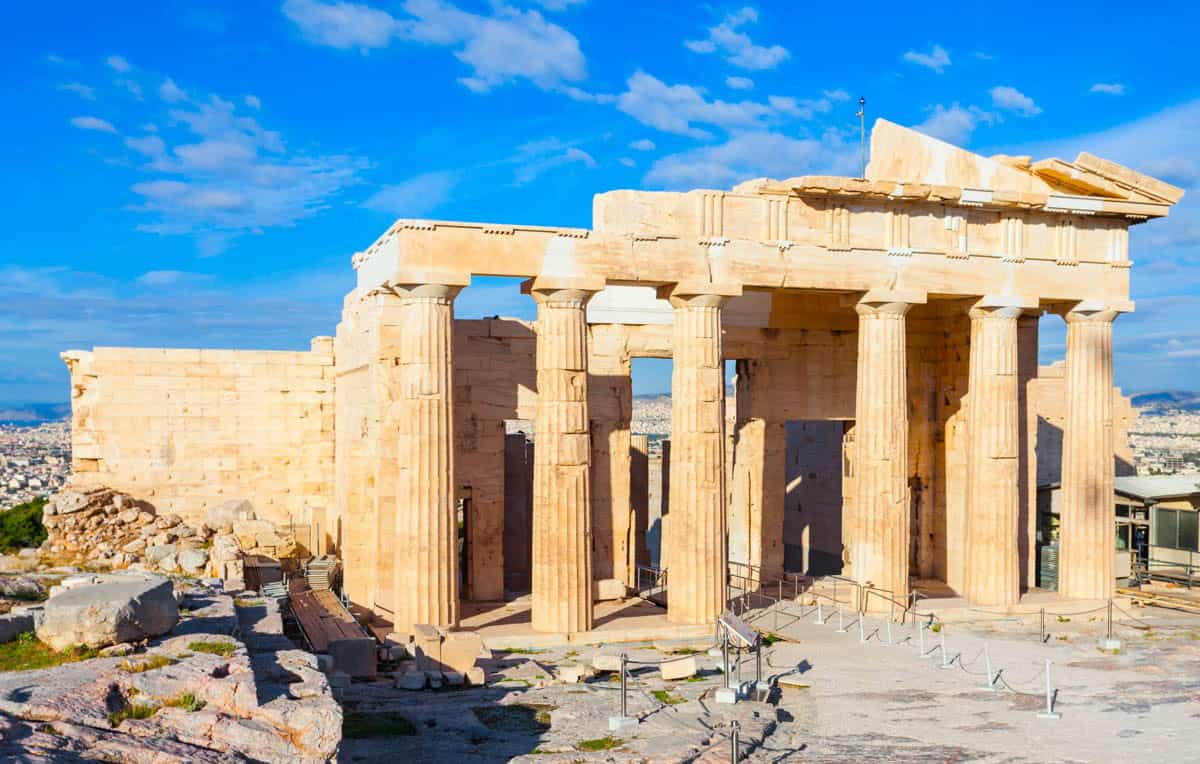
Climb the marble stairway into the monumental gateway onto the summit plateau

3
View the Parthenon

View the Parthenon

Circle the Doric temple from all sides to see the still-visible column curvature and surviving friezes

4
Visit the Erechtheion

Visit the Erechtheion

See the Caryatid porch on the north side of the plateau, near the accessibility lift exit

5
Temple of Athena Nike

Temple of Athena Nike

Small Ionic temple on the southwest bastion beside the Propylaea

6
Descend south slope

Descend south slope

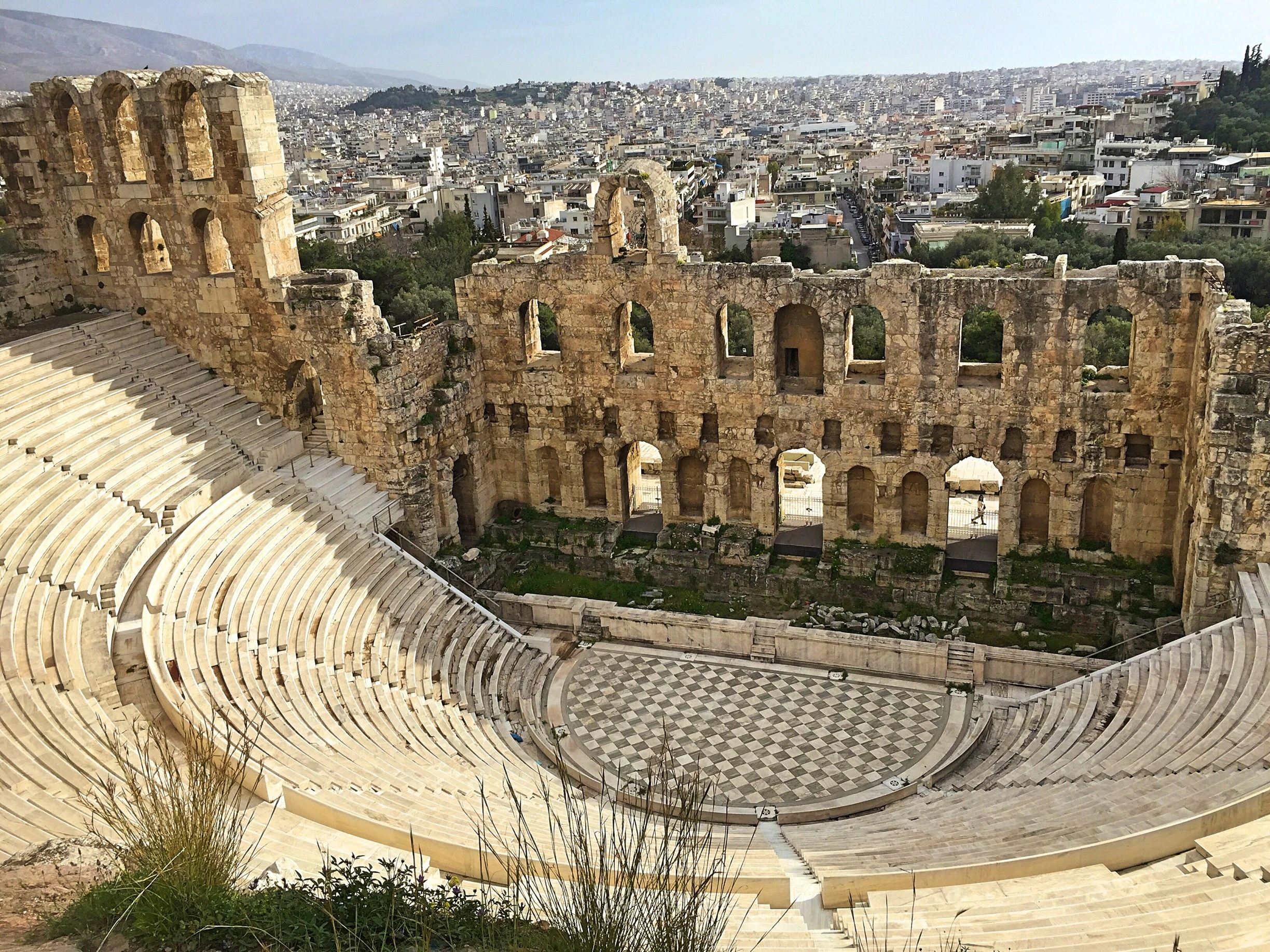
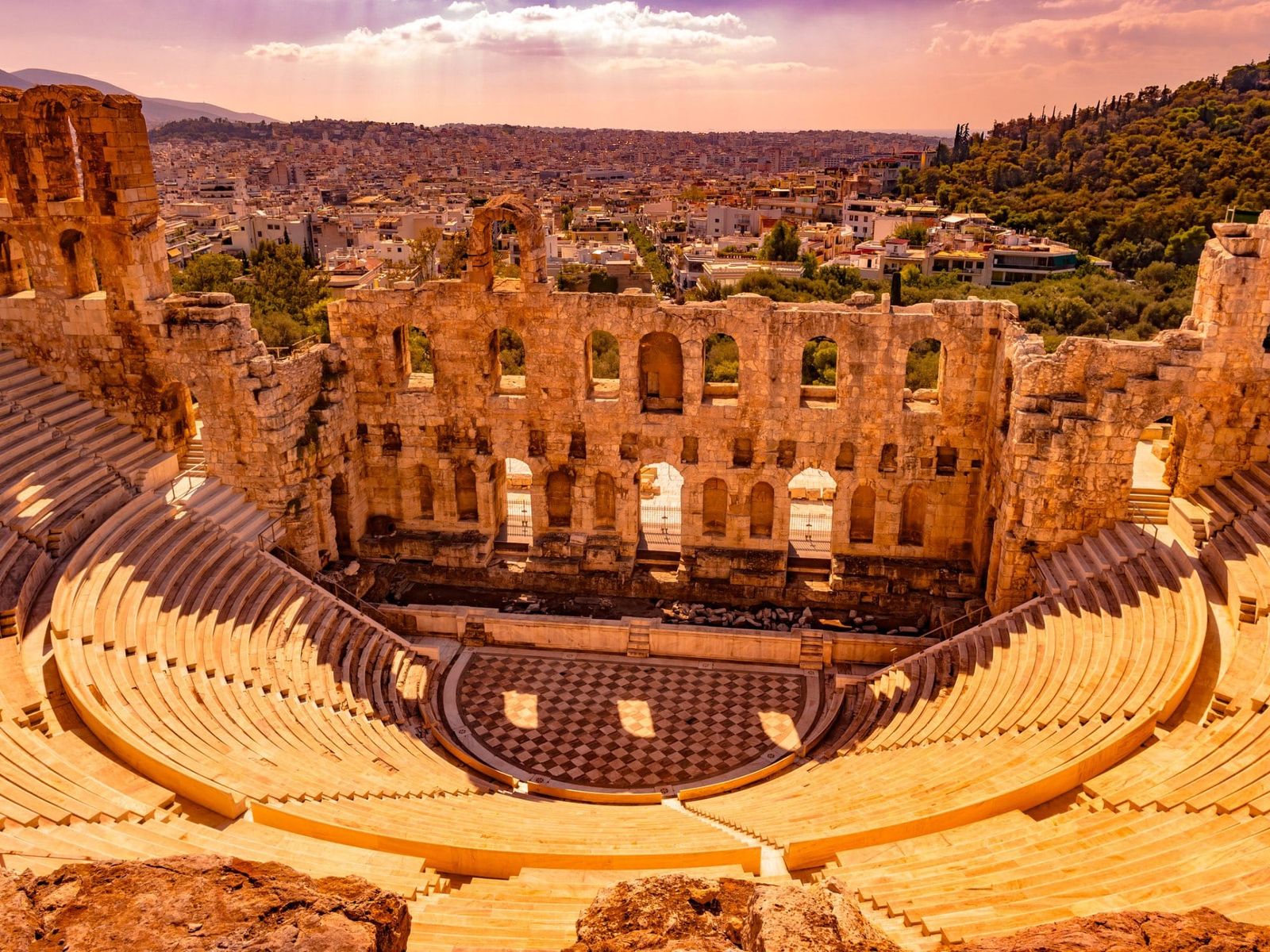
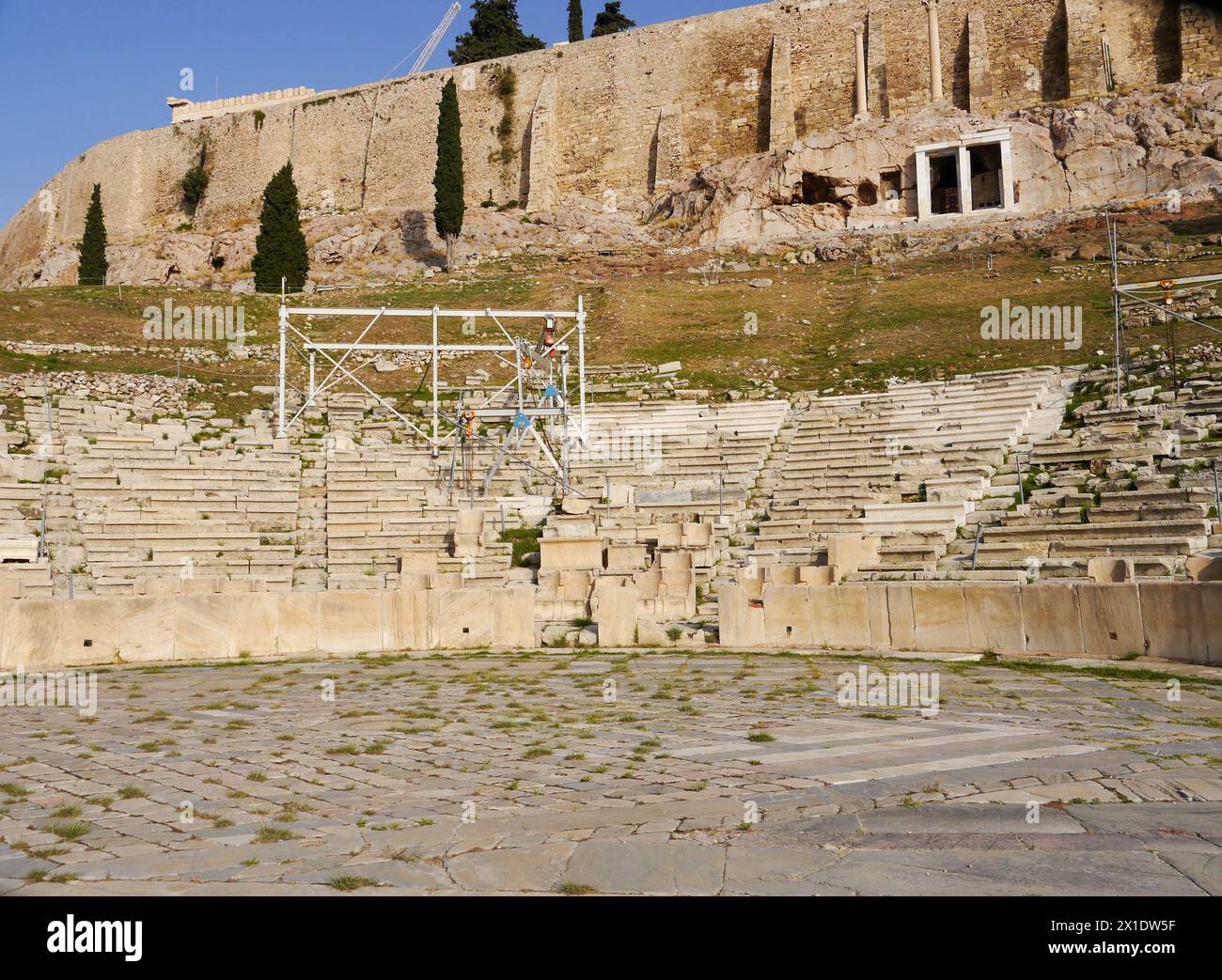
Pass the Theatre of Dionysus and Odeon of Herodes Atticus on the way down

What you'll see

What you'll see at Acropolis of Athens

Parthenon

Parthenon

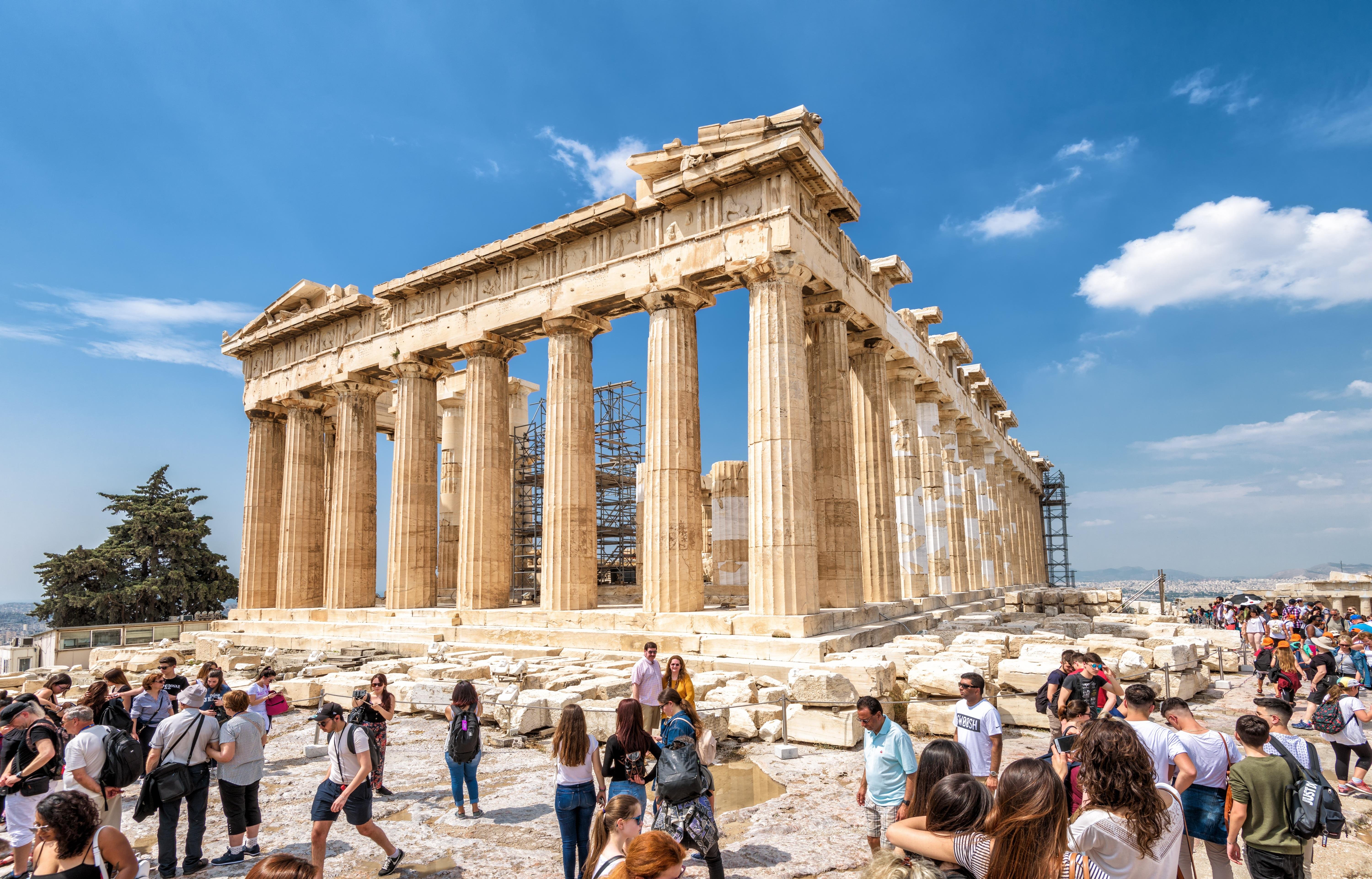
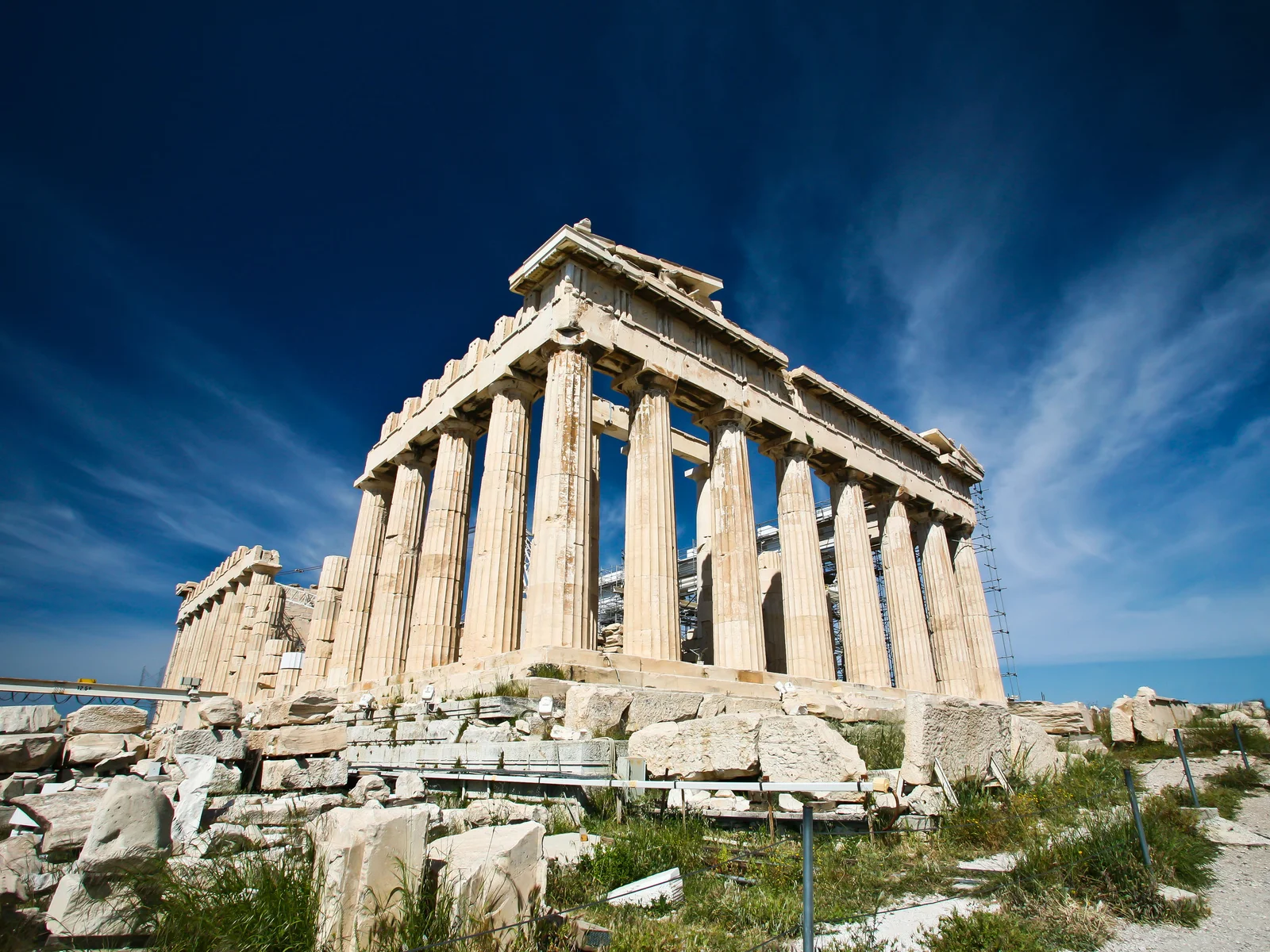
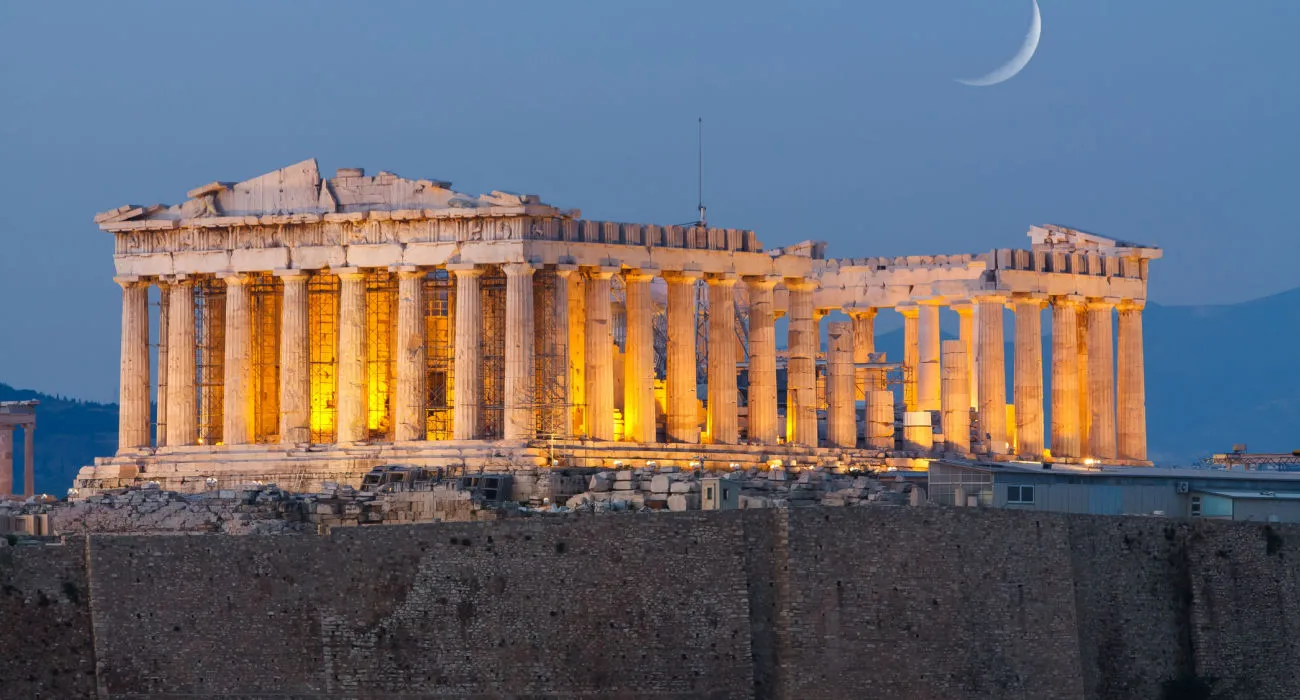
The Doric marble temple to Athena, built between 447 and 432 BC, dominates the summit with 46 outer columns that lean almost imperceptibly inward, an optical correction meant to make them appear perfectly straight. Its pediments once held sculptures now split between the Acropolis Museum and the British Museum.

Erechtheion

Erechtheion

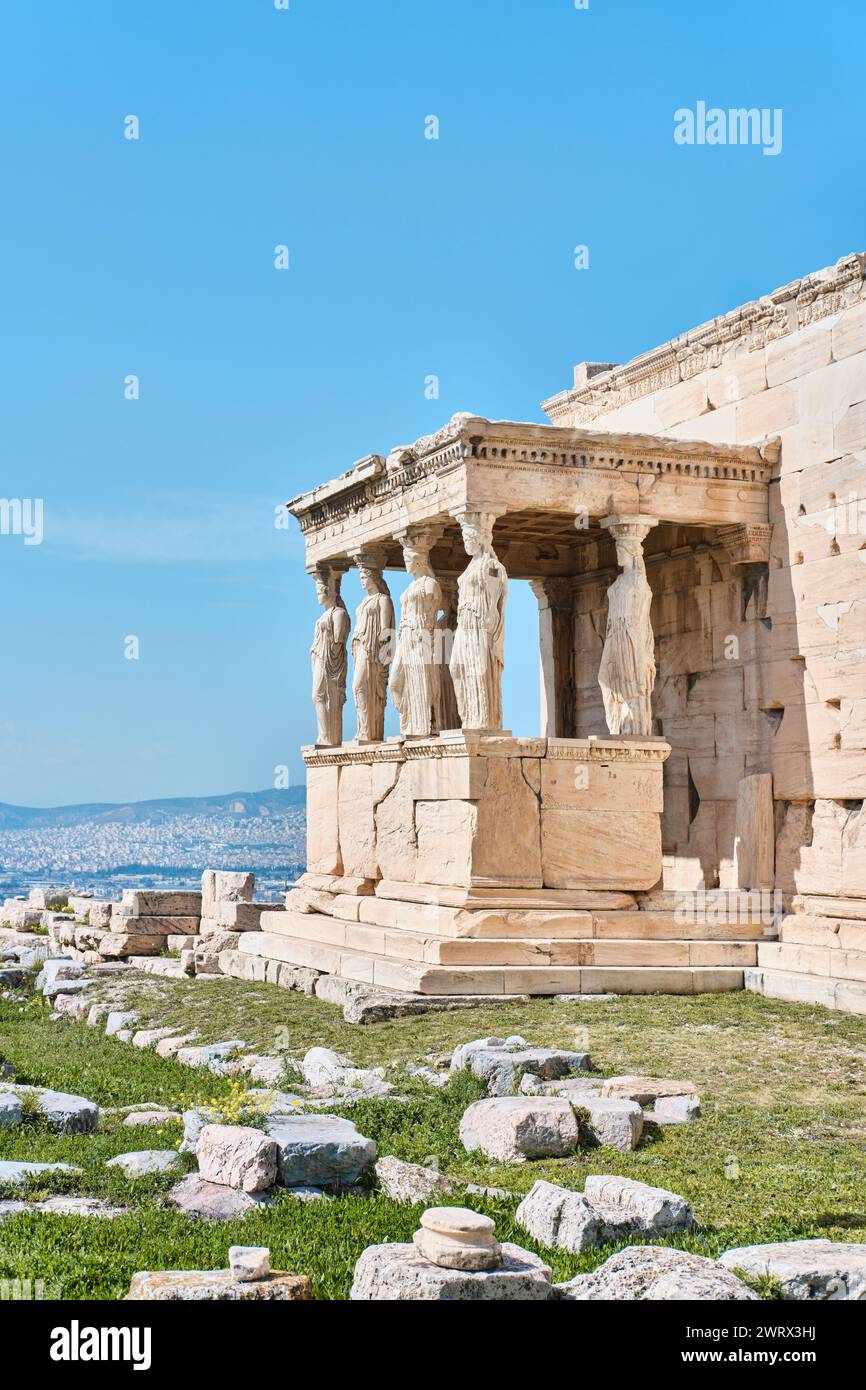
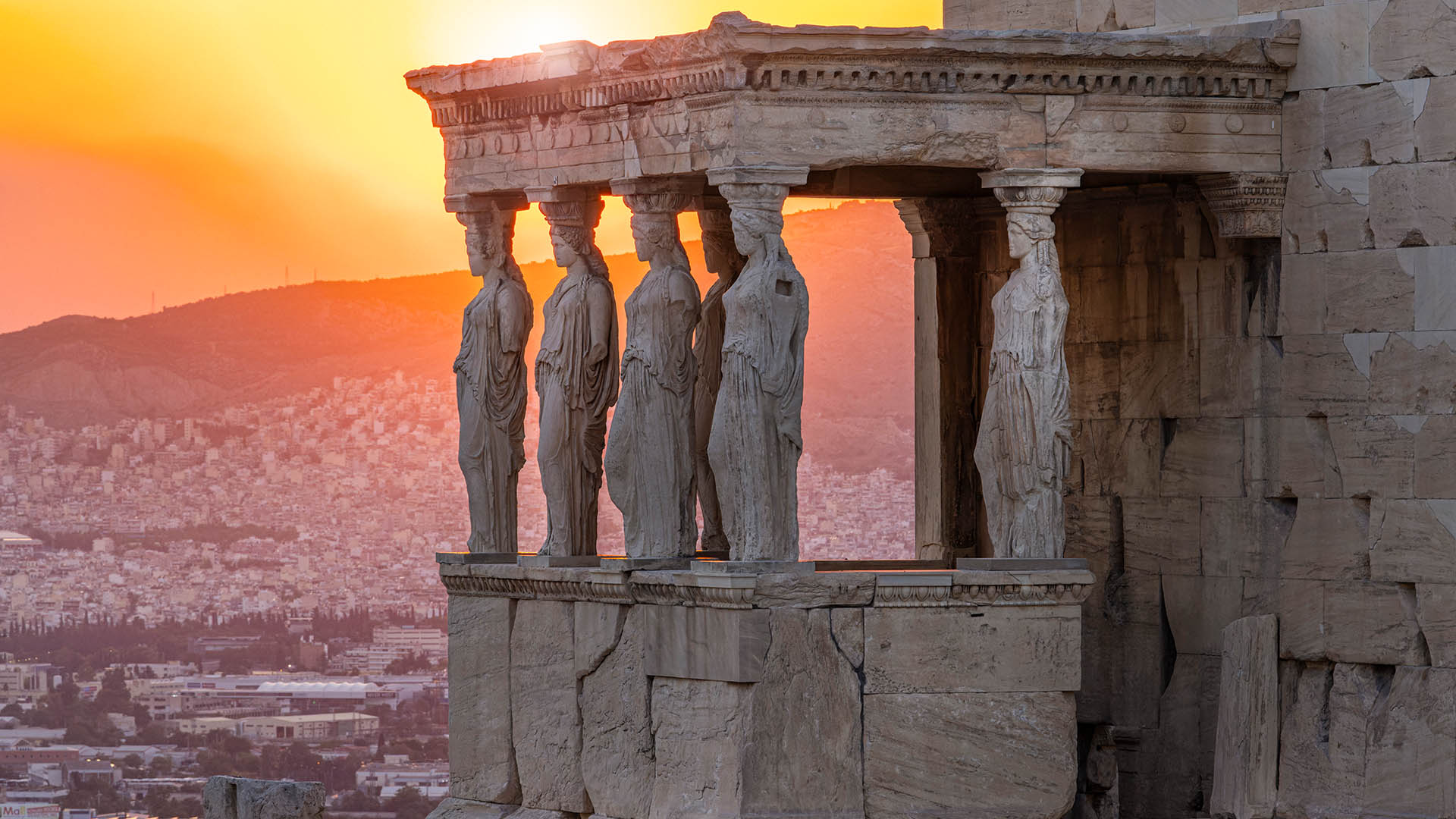
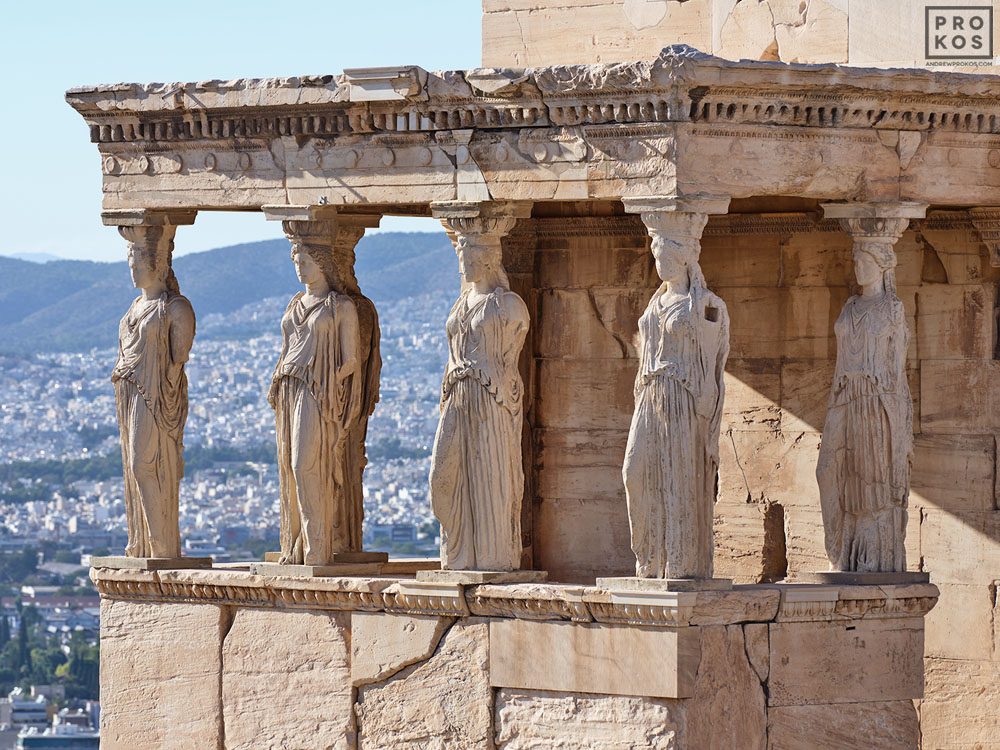
This Ionic temple on the north side of the plateau is best known for its Porch of the Caryatids, six draped female figures supporting the roof in place of columns. The originals now stand in the Acropolis Museum, replaced on site by weather-resistant casts.

Propylaea

Propylaea

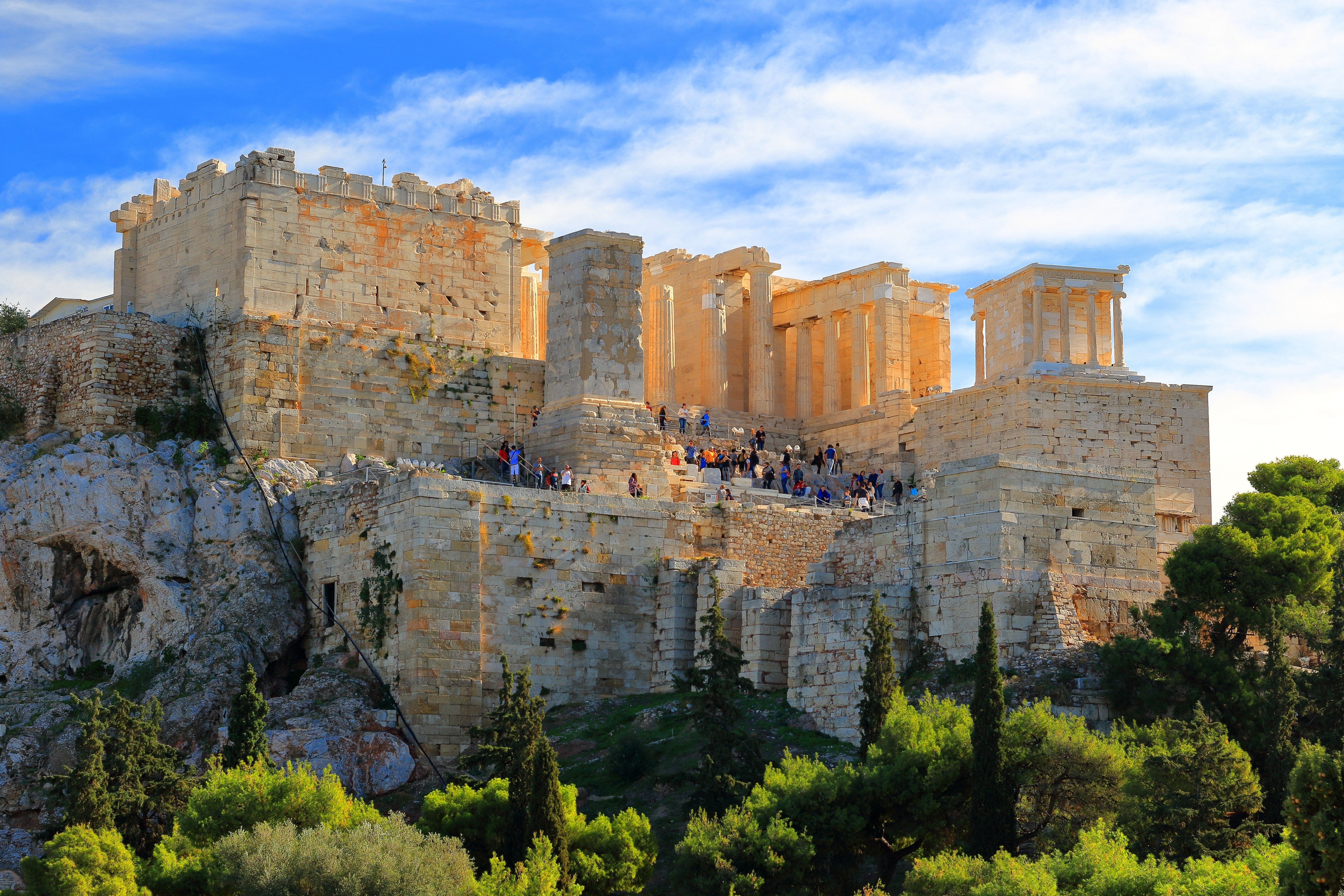
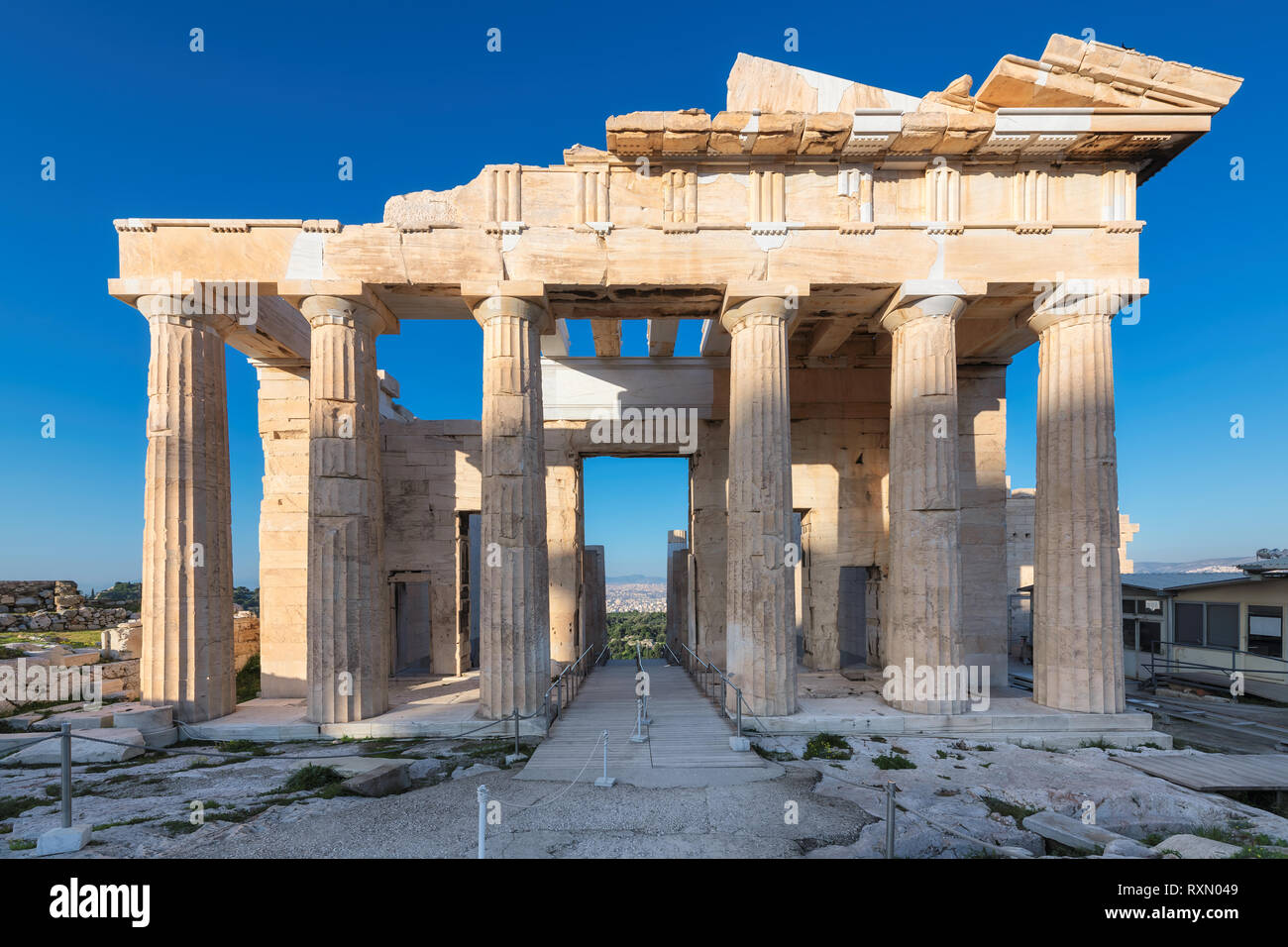
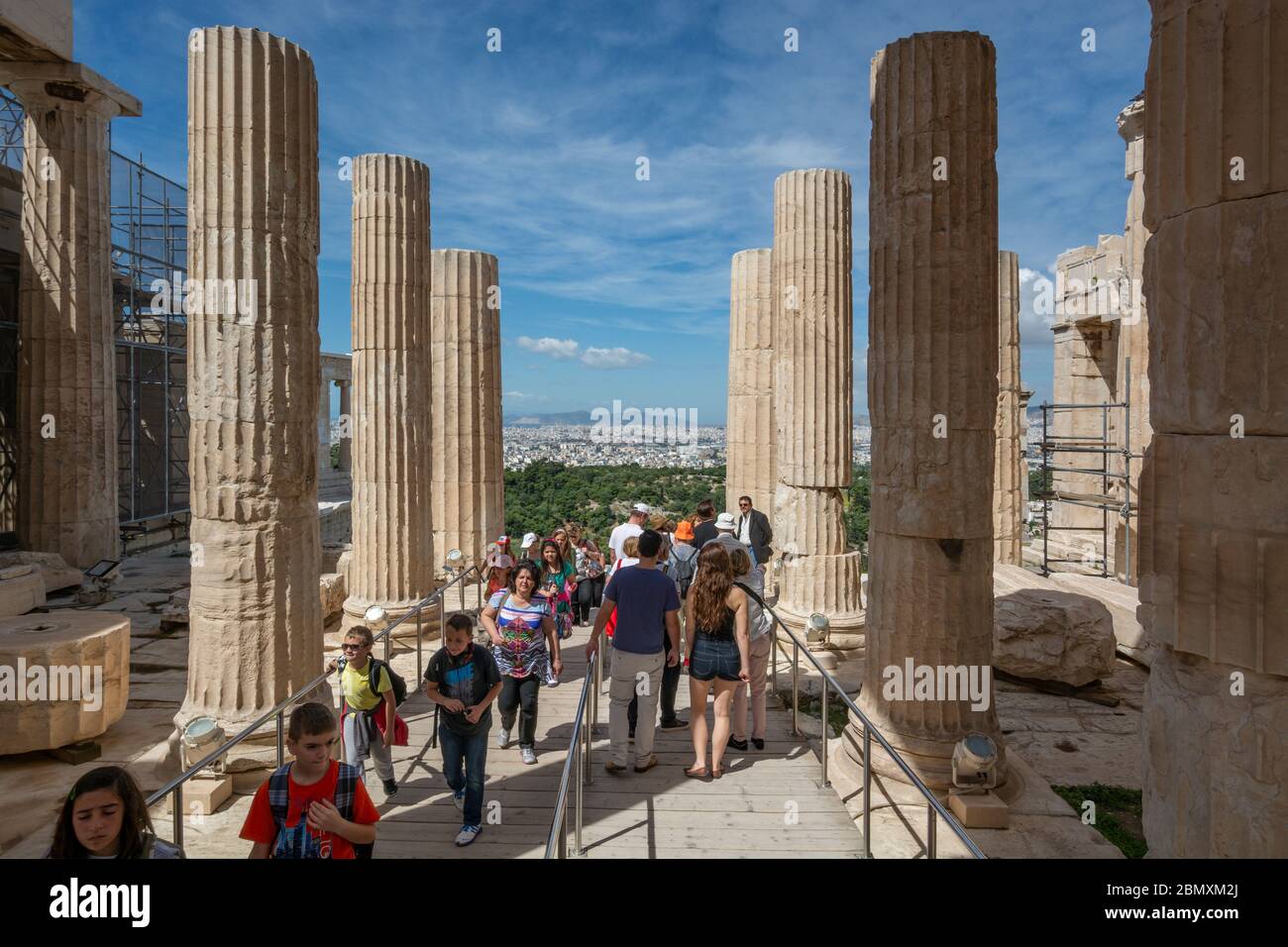
This monumental Doric gateway, designed by the architect Mnesikles, formed the grand ceremonial entrance to the sacred precinct starting in 437 BC and was never fully completed due to the outbreak of the Peloponnesian War.

Temple of Athena Nike

Temple of Athena Nike

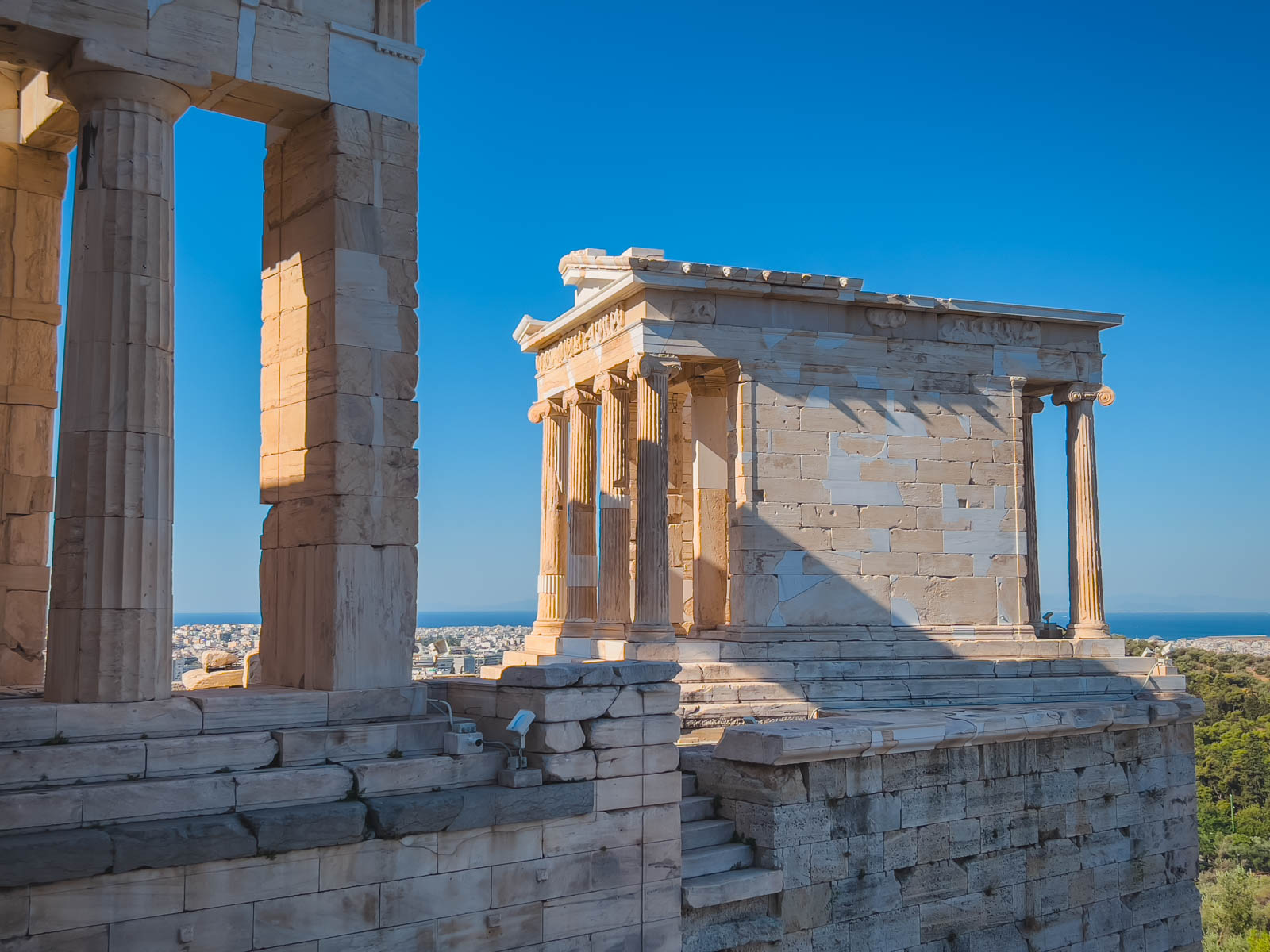
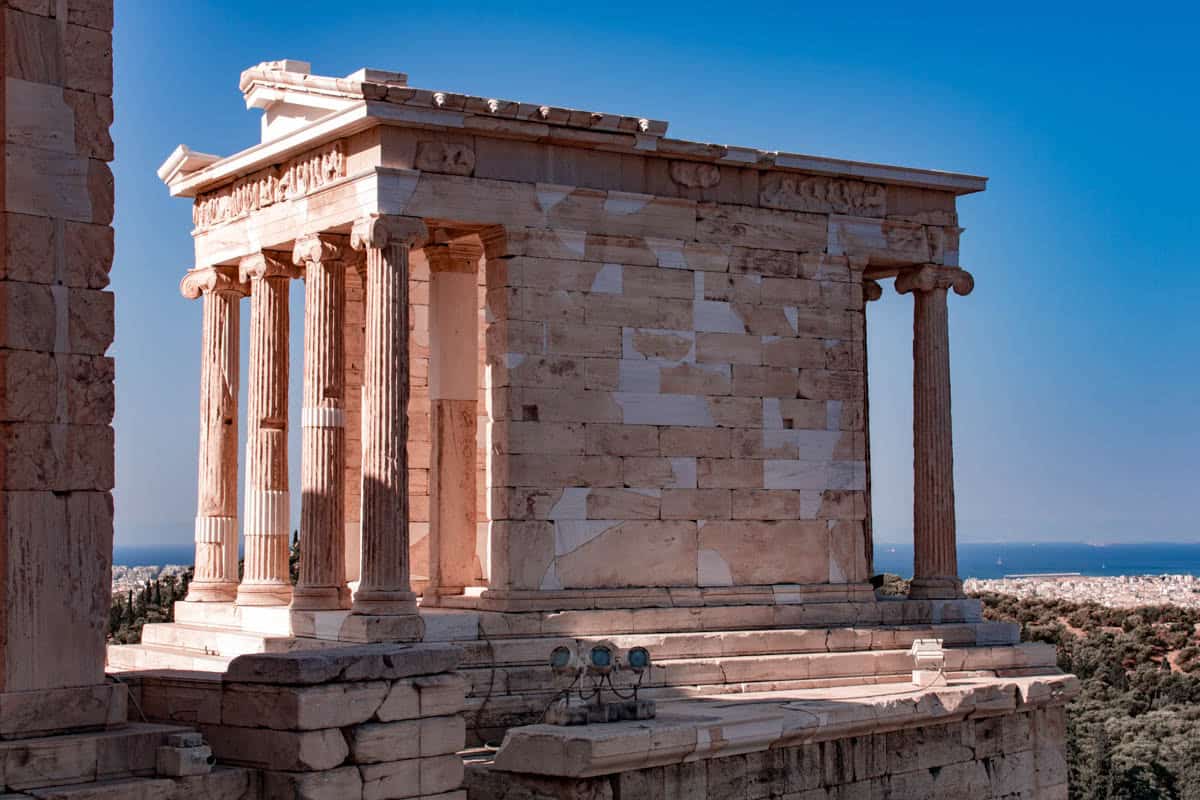
Perched on a narrow bastion beside the Propylaea, this compact Ionic temple built between 421 and 406 BC is the smallest of the major structures on the hill and honors Athena in her role as goddess of victory.

Theatre of Dionysus

Theatre of Dionysus

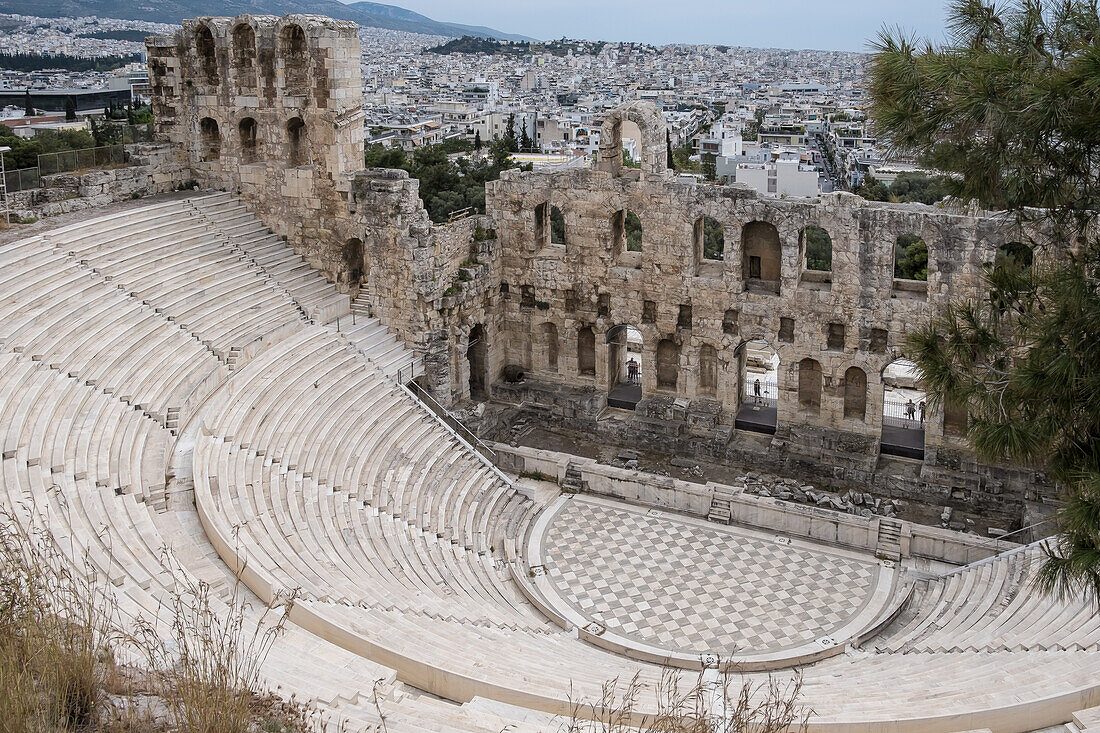
Carved into the south slope of the hill, this is considered the birthplace of Greek tragedy, with stone seating that once held tens of thousands of spectators for works by Sophocles and Euripides.

Odeon of Herodes Atticus

Odeon of Herodes Atticus

Built in 161 AD by the Roman senator for whom it is named, this steep stone amphitheater on the south slope still hosts live performances each summer and seats roughly 5,000 people.

The experience

What visiting Acropolis of Athens is really like

You arrive at the Dionysiou Areopagitou entrance before 09:00, inside the 08:00–09:30 window, while the marble is still cool and the queue is short. You show your voucher, pass the gate, and start climbing. The path is worn stone, not steps at first — a switchback ramp that turns twice before the Beulé Gate appears.

Read more Show less

Then the Propylaea. You slow here, because everyone does, and because the columns funnel you upward through shadow into open light. Coming out the far side, the Parthenon is suddenly to your right and much larger than photographs suggest. You walk its northern flank first, counting the seventeen columns, then round the eastern end where the morning sun hits the pediment directly.

You cross to the Erechtheion and stand below the Caryatid porch. Six figures, one shoulder-turn each, drapery cut to read as fabric from thirty metres. You circle to the Temple of Athena Nike on its bastion and look south over Athens toward Piraeus and the sea.

By 10:30 the plateau has filled and the marble underfoot has begun to glare. You descend the southern slope instead of retracing your route, passing above the Theatre of Dionysus, and exit toward Makrigianni. Your Acropolis of Athens Tickets tour ends with the same stone you have been walking on, arranged differently, at eye level. You have been on the ruins for roughly two hours and your shirt is already dry-hot.

Acropolis of Athens Tickets
Everything You Need to Know

Your complete Acropolis of Athens guide

All the details about your upcoming adventure in one place

Acropolis of Athens Tickets: Entry Essentials

Acropolis of Athens Tickets grant access to the limestone citadel crowned by the Parthenon, the Erechtheion with its Caryatid porch, the Temple of Athena Nike and the Propylaea gateway. The rock rises above the Plaka district and the Theatre of Dionysus, with the marble Sacred Rock paths worn smooth by centuries of footfall. Standard admission and guided Acropolis of Athens Tickets tours share the same Dionysiou Areopagitou entrances, and a combined archaeological pass extends entry to the Ancient Agora and Kerameikos.

The Parthenon has no straight lines. Its columns swell at the midpoint, its stylobate curves upward at the centre, and its corner columns lean inward — refinements calculated so the eye would read the building as perfectly regular. This is architecture built to correct human vision.

The limestone outcrop rising 156 metres above Athens held a Mycenaean citadel long before Pericles commissioned the classical building programme in 447 BCE. Ictinus and Callicrates designed the Parthenon; Phidias oversaw its sculpture, including the lost chryselephantine Athena Parthenos. Later centuries treated the hill as inheritance rather than monument: the temple served as church, then mosque, then powder magazine, and a Venetian shell in 1687 removed its roof and much of its interior. Those layers are legible in the stone.

What draws visitors buying Acropolis of Athens Tickets today is not only the Parthenon. The Propylaea frames the entrance in Pentelic marble and grey Eleusinian limestone. The Erechtheion carries the six Caryatids — five originals now sheltered in the Acropolis Museum below, one held in London. The compact Temple of Athena Nike sits on a bastion overlooking the Saronic approach, its parapet once carved with winged victories. Beneath the southern slope, the Theatre of Dionysus marks the birthplace of Western drama, and the Odeon of Herodes Atticus still stages summer performances. Athens landmarks rarely cluster this densely.

Conservation has been continuous since 1975, and the scaffolding is part of the site's honest character. Restorers reverse earlier interventions, replacing corrosive iron clamps with titanium and returning displaced blocks through anastylosis — the reassembly of original material. Pentelic marble, quarried 16 kilometres northeast, weathers to a warm honey tone under strong sun; the same stone appears cold and blue-white at dawn. That shift explains why an Athens Acropolis tour scheduled early reads so differently from a midday one.

The monument was inscribed on the UNESCO World Heritage List in 1987 and remains the reference point for European classicism, cited in parliaments, banks and museums across three continents. Standard adult admission is 30 EUR per person. The site opens daily at 08:00 and closes at 20:00, and skip-the-line Acropolis entry is the practical form most Acropolis of Athens Tickets tours now take.

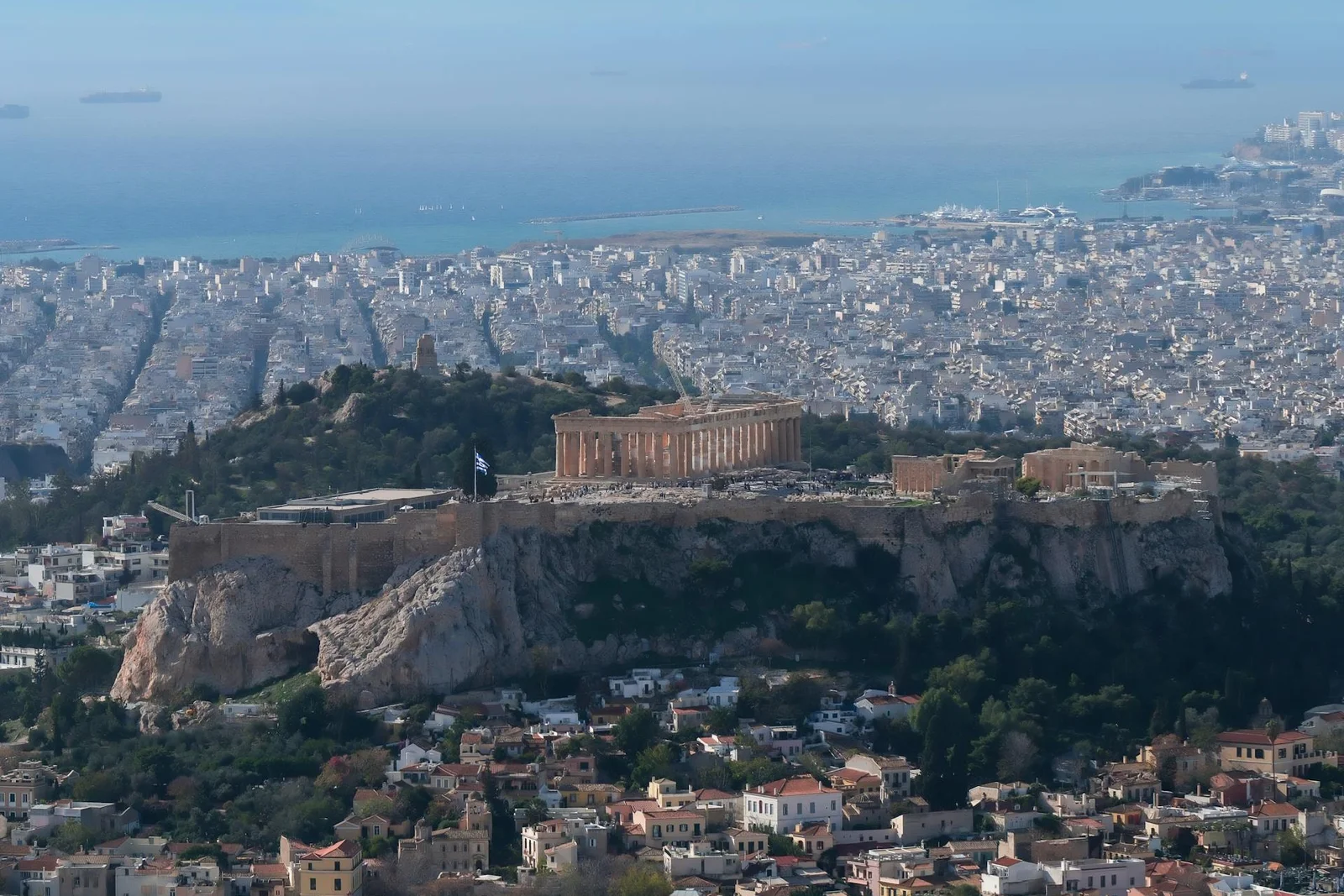
Seen from Filopappou Hill or the Ancient Agora, the rock reads as a single silhouette. Up close it resolves into thousands of individually cut, numbered, catalogued blocks — a working site, not a finished ruin, where visitors holding Acropolis of Athens Tickets tickets walk through an argument about proportion that has never quite been settled.


The Parthenon has no straight lines — it is architecture built to correct human vision.

Dress code

Wear closed, flat, rubber-soled shoes, since the ancient marble underfoot at the Acropolis of Athens is polished smooth and genuinely slippery even in dry weather. Sandals and heeled shoes are discouraged on the steep, uneven paths leading up to the Parthenon and Erechtheion.

Bags & security

Bag checks and walk-through security are standard at both the West Propylaea Gate and the South Slope Dionysus Gate. Large backpacks, suitcases, and bags larger than a small daypack are not permitted inside and have no on-site storage option, so travelers should leave oversized luggage at their hotel before arriving.

Photography

Personal photography and video are permitted throughout the site for non-commercial use, including of the Parthenon, Erechtheion, and Temple of Athena Nike. Tripods, monopods, selfie sticks, and drones are prohibited and will be confiscated or turned away at the gate.

Families & strollers

Children under 6 enter free with valid ID or a birth document. Strollers are difficult to maneuver on the ancient stone paths, so a baby carrier is more practical than a pushchair.

Accessibility

A free wheelchair lift on the north side of the hill carries visitors with mobility impairments up to the plateau near the Erechtheion, though it can be suspended in high winds. The Parthenon and Erechtheion interiors are not open to any visitors, and some paths beyond the lift remain uneven stone.

Food & drink

Eating and picnicking are not allowed anywhere on the archaeological site, and there are no cafés or kiosks inside the perimeter. Small sealed water bottles are permitted, and a public drinking fountain near the entrance allows refills.

Not allowed

× Large backpacks × Suitcases × Tripods × Monopods × Selfie sticks × Drones × Glass containers × Alcohol × Food for picnicking × Camping or hiking poles × Pets (except service animals) × Amplified speakers × Spray paint or markers × Sharp tools

What to bring

✓ Valid photo ID ✓ Printed or mobile e-ticket ✓ Sun hat ✓ Sunscreen ✓ Small sealed water bottle ✓ Flat rubber-soled shoes ✓ Light daypack ✓ Portable phone charger

Opening hours

Mon 08:00 – 20:00

Busiest midweek mornings

Tue 08:00 – 20:00
Wed 08:00 – 20:00

Moderate crowds

Thu 08:00 – 20:00
Fri 08:00 – 20:00

Cruise-ship groups common

Sat 08:00 – 20:00

Heaviest weekend footfall

Sun 08:00 – 20:00

How to get there

Closures & exceptions

  • ·Jan 1 — New Year's Day
  • ·March 25 — Greek Independence Day
  • ·May 1 — Labour Day
  • ·Easter Sunday — Greek Orthodox Easter
  • ·Dec 25 — Christmas Day
  • ·Dec 26 — Boxing Day

At a glance

Hours

Daily 08:00–20:00, last entry 30 minutes before closing

Address

Acropolis of Athens, Athens 105 58, Greece

Mobility access

Free north-side lift to the plateau, weather-dependent

Climate

Hot, shadeless summer sun on exposed marble — hats and water essential

Bag policy

No large bags or backpacks over cabin size permitted inside

Layout

Two entrances — West Propylaea Gate and South Slope Dionysus Gate

Getting there

Public transport · 20-25 min from Syntagma · Metro ticket about EUR 1.40

Take Metro Line 2 (red line) to Acropoli station, then walk about 5-10 minutes south along Dionysiou Areopagitou Street to the entrance.

Walk · 15-20 min from Plaka · Free

From Syntagma Square or the Plaka neighborhood, it's a direct uphill walk along pedestrianized streets to the site.

Taxi · 10-20 min from central Athens · Approx. EUR 8-15

Taxis reach the site from central Athens hotels or Piraeus port directly, dropping near either entrance gate.

Car · 20-30 min from northern suburbs · Metered street parking where available

Limited public parking exists near Makrigianni; most visitors use metro or taxi instead due to restricted access roads around the hill.

Cancellation policy

Acropolis of Athens Tickets booked for a fixed time slot are generally non-refundable and non-transferable once the entrance fee of 30 EUR has been paid, though some third-party resellers allow free cancellation up to 24 hours before the visit date. Always check the specific refund window shown at checkout before completing payment.

Plan your time

How Long to Spend on Your Acropolis of Athens Tickets Visit

Recommended time

2-3 hours

Most visitors need 2-3 hours to walk the site path, take in the Parthenon, Erechtheion, and Propylaea, and pause for views over Athens, which is the window most Acropolis of Athens Tickets bookings are built around. Add 30-45 minutes if you want to linger for photos at each monument, and trim toward 90 minutes if you only want the headline structures. Arriving in the 08:00-09:30 window means climbing against light foot traffic, with crowds building steadily until early afternoon before easing again later in the day. Queue reality: even with timed tickets, the ramp and Propylaea gateway bottleneck once tour groups converge mid-morning, so early or late slots move noticeably faster than midday ones.

Crowd levels through the day

Opening rush (08:00-09:00) Light
Mid-morning (09:00-11:00) Building
Midday peak (11:00-14:00) Heavy
Early afternoon (14:00-16:00) Heavy
Late afternoon (16:00-18:00) Moderate
Last entry window (18:00-19:30) Light
Plan ahead

Best time to visit Acropolis of Athens

Weather · crowds · average price — dots go green to amber to red as each metric rises.

Spring

April and May bring mild 18-24°C days, wildflowers on the slopes, and lighter crowds than peak summer, making this one of the most comfortable windows for Acropolis of Athens Tickets.

Summer

June through August sees temperatures regularly above 32°C with intense midday sun and the heaviest cruise-ship crowds of the year.

Autumn

September and October keep warm 22-27°C afternoons while visitor numbers ease off after the August peak.

Winter

November through March is coolest and quietest, with occasional rain but the shortest queues of the year.

Insider tips

Helpful tips for visiting Acropolis of Athens

Book a timed slot ahead

Reserve your entry window in advance through the official hhticket.gr platform, especially for July and August visits when morning slots can sell out weeks ahead.

Choose the south entrance

The Dionysus Gate on the south slope tends to have shorter queues than the main west Propylaea Gate, where most tour buses unload.

Wear the right shoes

Ancient polished marble is slippery even when dry, so flat rubber-soled shoes are safer than sandals or leather soles.

Refill water beforehand

There is a drinking fountain near the entrance, but no shops or cafés inside, so bring or refill a sealed bottle before entering.

Carry ID for discounts

EU citizens under 25 should carry a passport or ID card to claim free entry at the gate.

Mind the lift schedule

The free accessibility lift on the north side can be suspended during high winds, so travelers with mobility needs should check conditions on arrival.

Combine with the museum

The Acropolis Museum sits a five-minute walk from the South Slope Gate and pairs naturally with an Acropolis of Athens Tickets visit for full context on the sculptures.

Where to meet

Acropolis of Athens meeting points

West Propylaea Gate

West Propylaea Gate

Acropolis of Athens, Athens 105 58, Greece

Main entrance, direct approach to the Propylaea and hilltop monuments

Get directions
South Slope Dionysus Gate

South Slope Dionysus Gate

Dionysiou Areopagitou Street, Athens 117 42, Greece

Entrance nearest the Acropolis Museum, passes the Theatre of Dionysus

Get directions
The story

The History Behind Acropolis of Athens Tickets: From Pericles to Restoration

The rock was fortified long before Pericles. Mycenaean builders raised cyclopean walls there in the thirteenth century BCE. A sanctuary of Athena followed. In 480 BCE the Persian army under Xerxes burned the summit, destroying the unfinished Older Parthenon. The Athenians buried the shattered sculpture in the rock itself, and for three decades left the ruins standing as a memorial. Visitors who buy Acropolis of Athens Tickets today walk over that deliberate silence. Pericles ended it. Funded by the Delian League treasury, his building programme began in 447 BCE with the Parthenon, designed by Iktinos and Kallikrates under the general supervision of Pheidias. The temple was structurally complete by 438 BCE; its pedimental sculpture was finished in 432. Mnesikles built the Propylaia between 437 and 432 BCE, never completing the intended wings. The Erechtheion, with its Caryatid porch, was finished around 406 BCE, and the small Ionic temple of Athena Nike around 420 BCE. Pentelic marble, drawn from a quarry sixteen kilometres away, gives the buildings the warm tone that surprises those arriving on an Athens Acropolis tour. Use and reuse followed. The Romans added a monument to Agrippa near the Propylaia in the first century BCE. In the sixth century CE the Parthenon became a Christian church dedicated to the Virgin, and in the Ottoman period, after 1458, it served as a mosque, with a minaret raised inside the cella. The catastrophe came on 26 September 1687, when a Venetian mortar under Francesco Morosini struck the Ottoman powder magazine stored in the Parthenon. The explosion blew out the building's centre. Between 1801 and 1812 Lord Elgin removed a large portion of the surviving sculpture, a dispute still unresolved. Those who book Acropolis of Athens Tickets tours often hear the argument rehearsed on the walk up. Modern conservation began after Greek independence, when the Ottoman village on the summit was cleared from the 1830s. Nikolaos Balanos rebuilt sections between 1898 and 1939 using iron clamps that later rusted and cracked the marble. The Acropolis Restoration Service, founded in 1975, has since reversed that work, replacing iron with titanium. The project continues in 2026. Any Acropolis of Athens Tickets tour now passes cranes and scaffolding, and Acropolis of Athens Tickets tickets grant access to a UNESCO World Heritage monument that remains, after twenty-five centuries, a working building site among the great Athens landmarks.

13th c. BCE

Mycenaean builders enclose the summit with cyclopean fortification walls.

480 BCE

The Persian army of Xerxes burns the sanctuary and the unfinished Older Parthenon.

447-432 BCE

Pericles funds the Parthenon, built by Iktinos and Kallikrates under Pheidias.

437-406 BCE

Mnesikles raises the Propylaia; the Erechtheion and temple of Athena Nike follow.

6th c. CE

The Parthenon is converted into a Christian church dedicated to the Virgin.

1458

Ottoman forces take the citadel; the Parthenon later serves as a mosque with an internal minaret.

1687

A Venetian mortar ignites the Ottoman powder magazine, destroying the Parthenon's centre.

1975

The Acropolis Restoration Service is founded and begins reversing Balanos's iron-clamp repairs.

Photo spots

Best Photo Spots for Acropolis of Athens Tickets and the Parthenon View

Filopappou Hill

Filopappou Hill

Best light · Sunset, or sunrise for fewer crowds

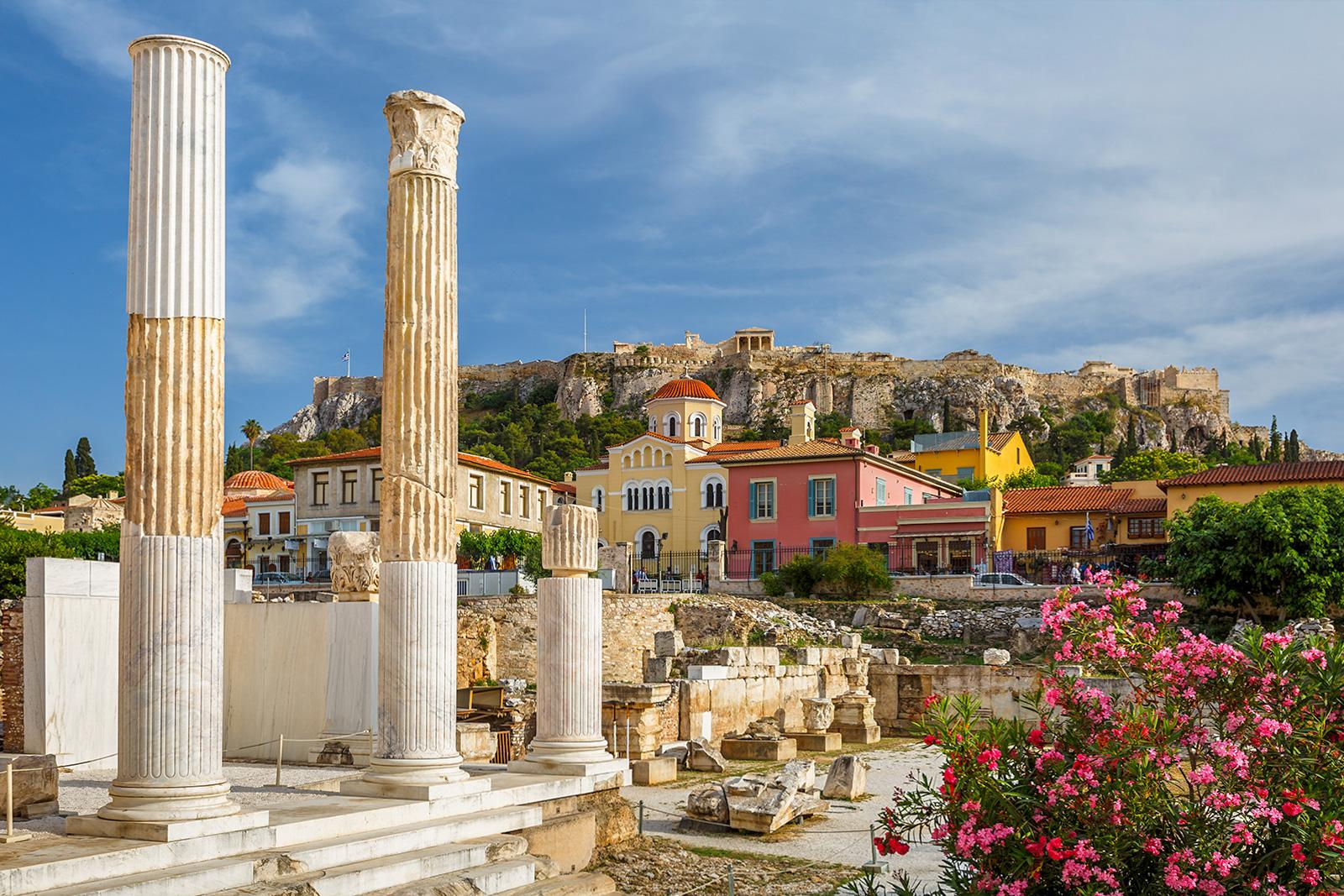
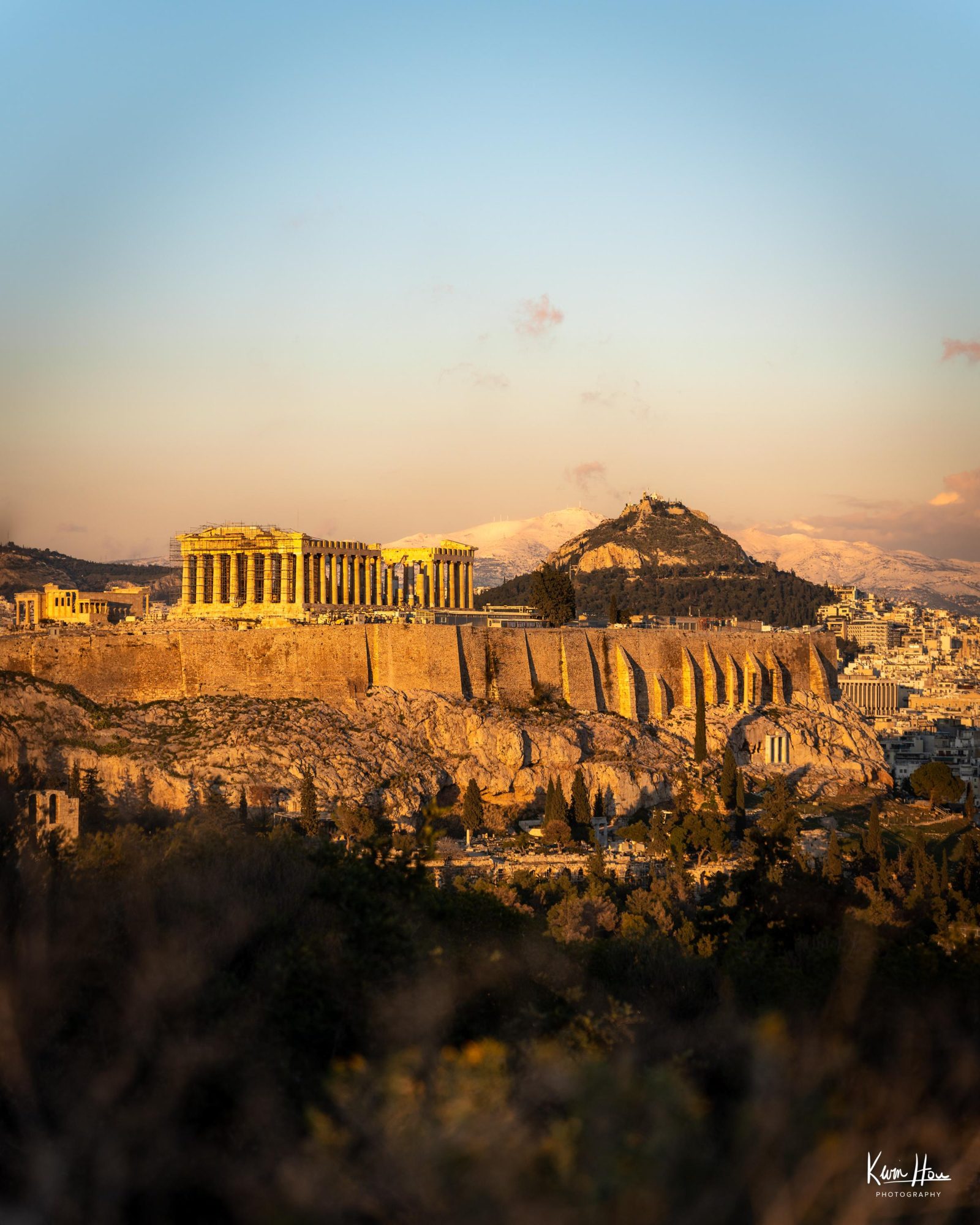
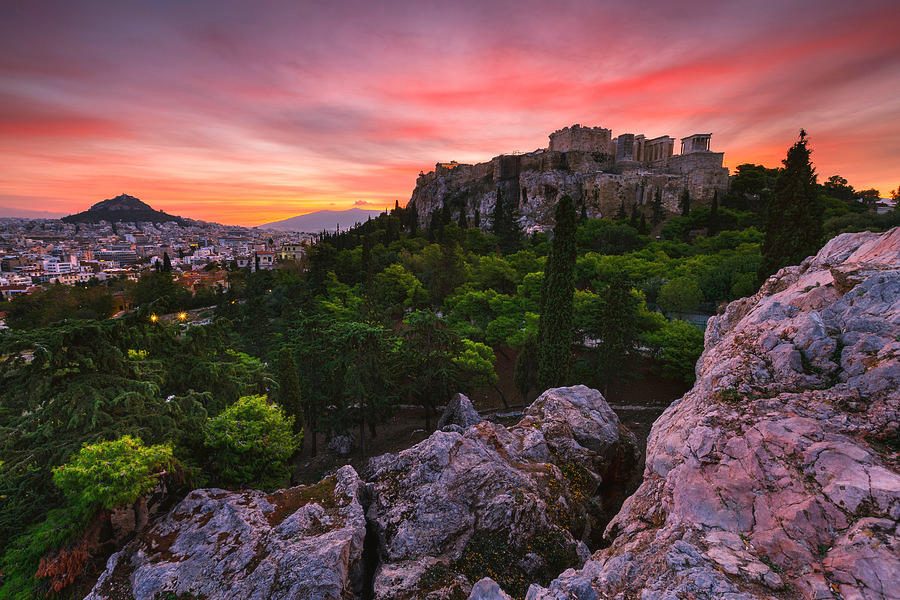
The classic wide shot of the Parthenon rising above the pines, taken from the marble platform near the Monument of Filopappos, roughly 15 minutes on foot southwest of the site; many visitors booking Acropolis of Athens Tickets add this hill afterward for the full silhouette view.

Areopagus (Mars Hill)

Areopagus (Mars Hill)

Best light · Late afternoon light, moderate crowds

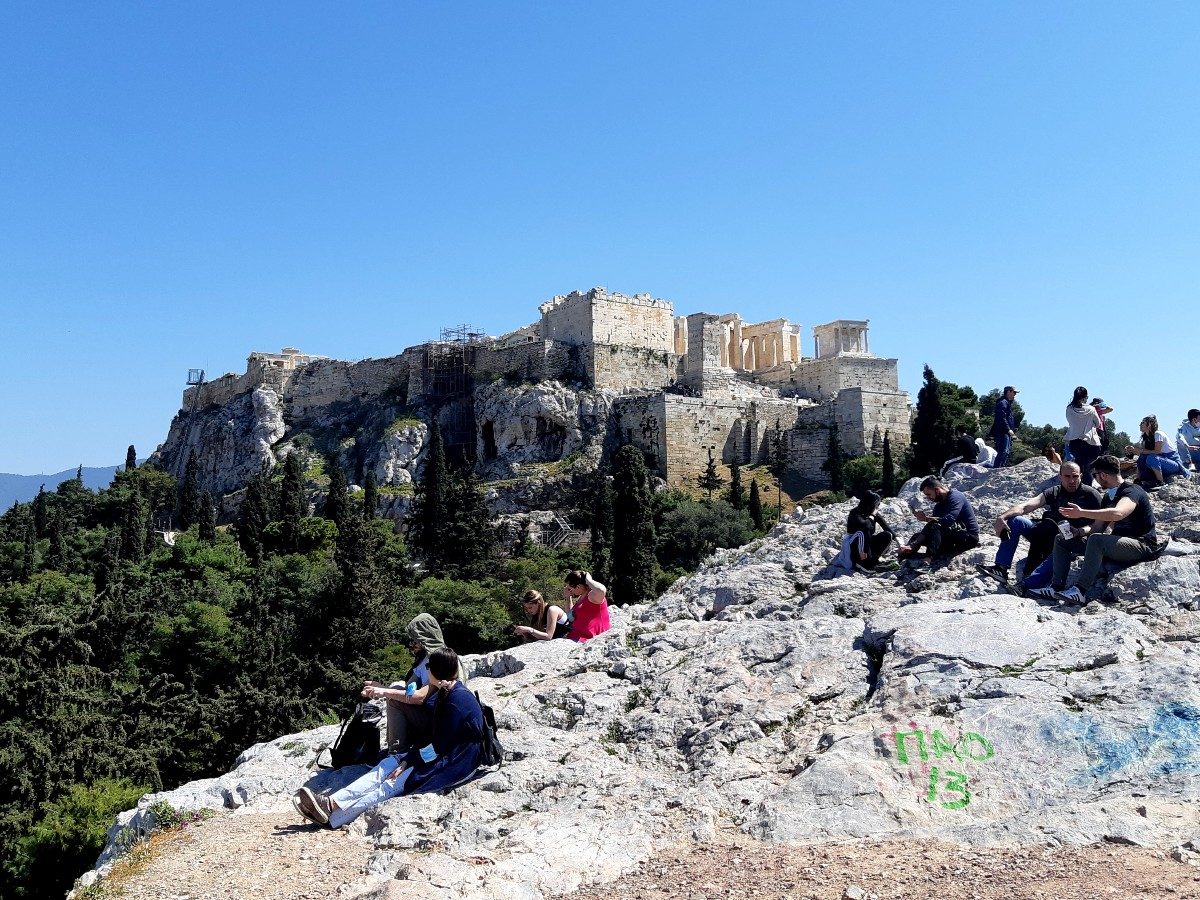
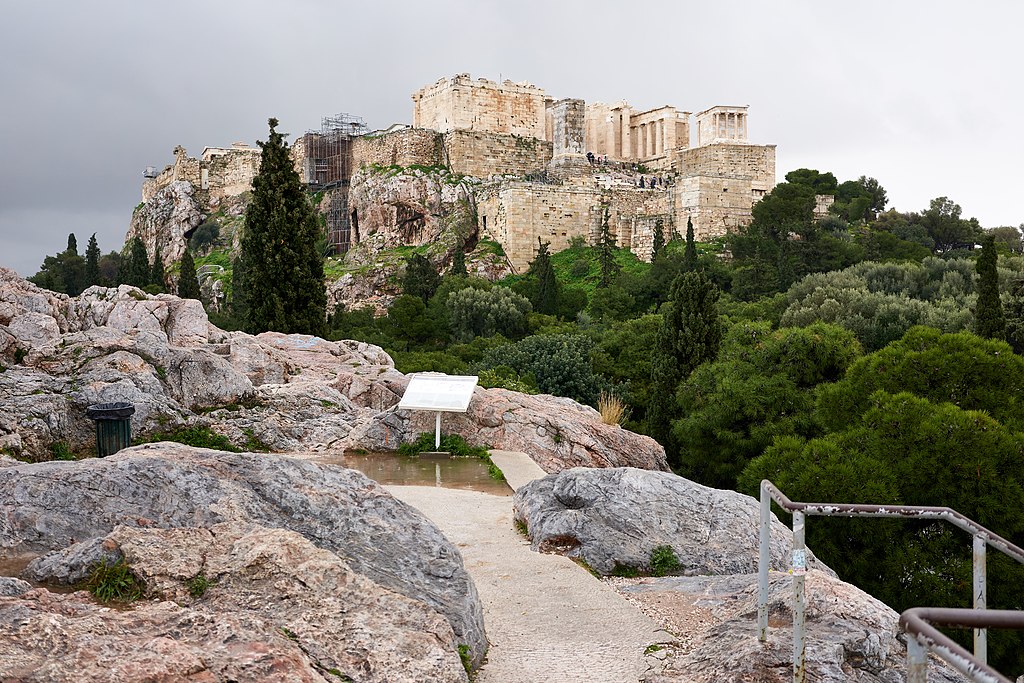
A closer, steeper-angle view straight up at the Propylaea from the smooth limestone outcrop just below the main entrance, reached via a short metal staircase; footing is slick when worn smooth, so rubber soles help.

Pnyx Hill

Pnyx Hill

Best light · Early morning or sunset, low crowds

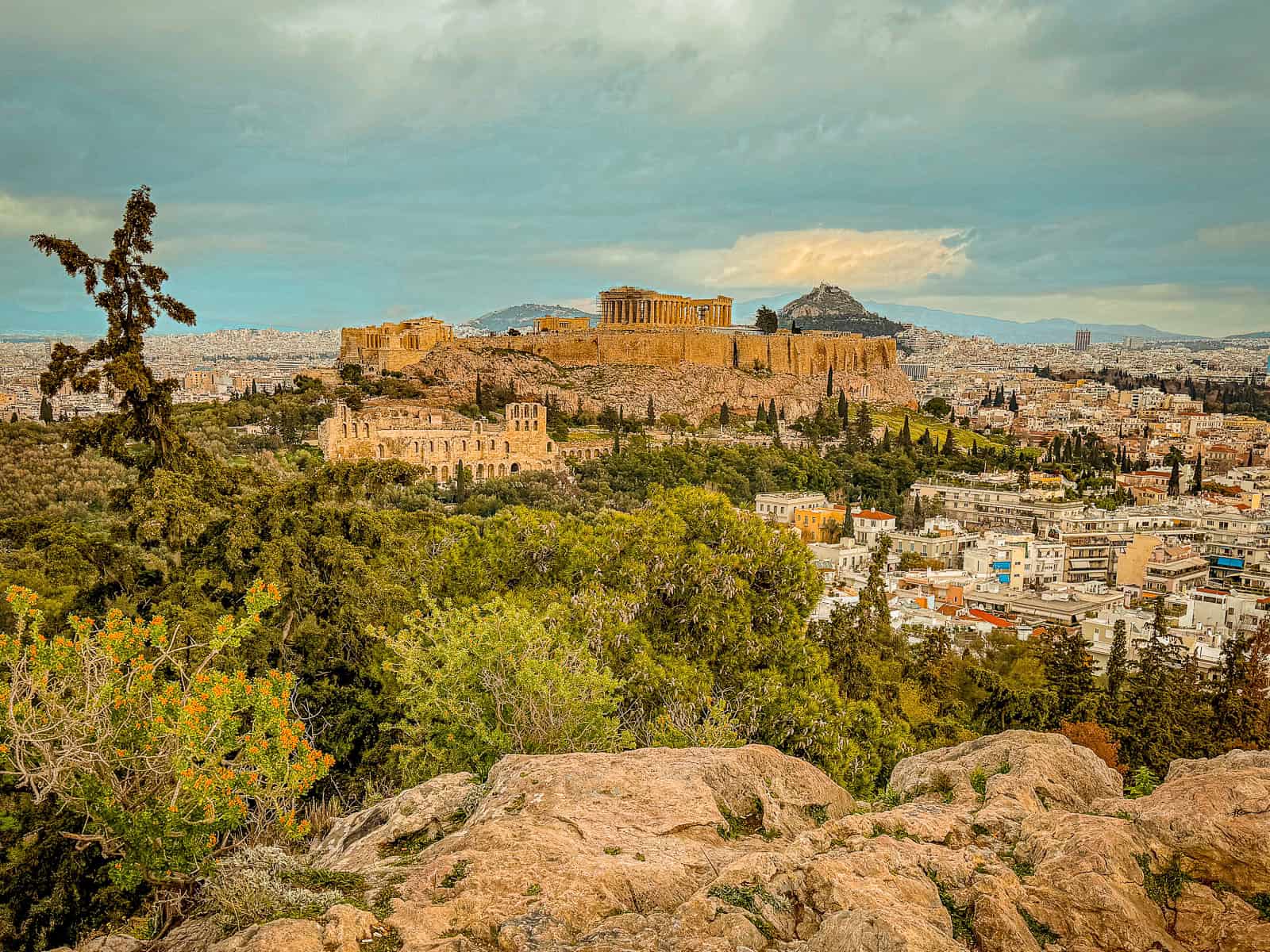
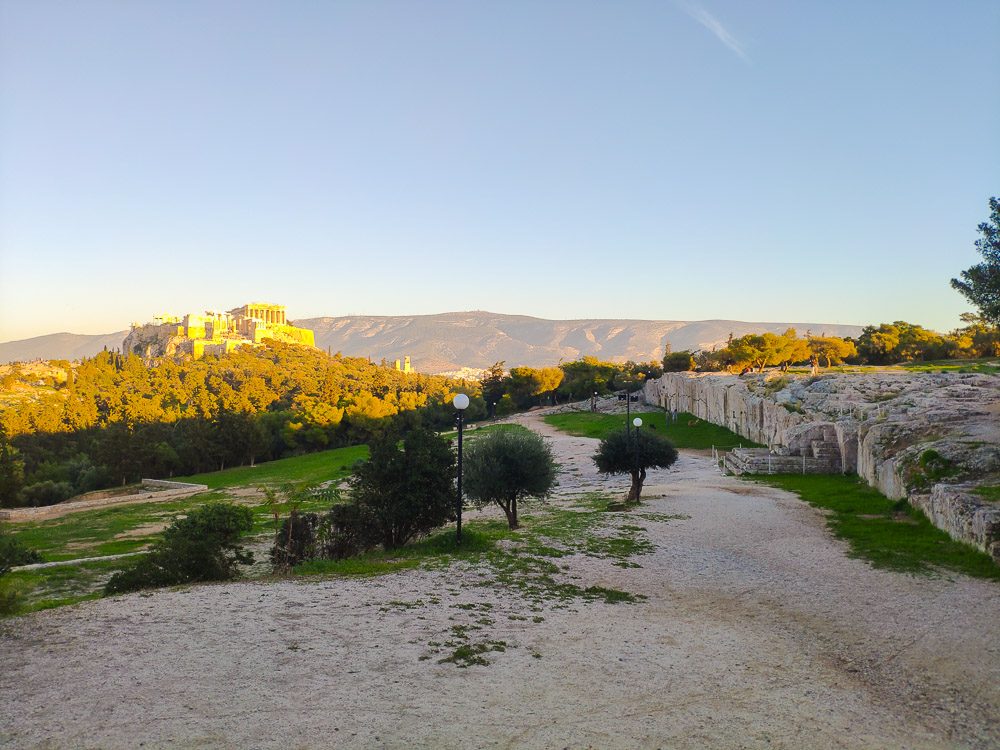
A quieter, more distant vantage across a shallow valley from the ancient assembly platform, offering a broader skyline shot with Lycabettus Hill visible behind the Acropolis; fewer visitors linger here than at Filopappou or the Areopagus.

Acropolis of Athens Tickets viewpoint at Areopagus

Acropolis of Athens Tickets viewpoint at Areopagus

Best light · Morning, before crowds build

Standing at the Areopagus railing, the Acropolis of Athens Tickets entrance path and the Propylaea columns line up almost directly overhead, making it a favored frame for arriving visitors.

Gallery

Moments from Acropolis of Athens

With kids

Visiting with Kids: Family Logistics for Acropolis of Athens Tickets

Booking Acropolis of Athens Tickets for a family trip means planning around marble, not strollers, since the ancient surfaces are uneven, steep, and slippery underfoot. With the right pacing and gear, though, young kids can handle the climb just fine.

Strollers

Strollers can't navigate the site's worn marble steps and are not permitted past the entrance; leave one in the free storage room near the main entrance and carry infants in a baby carrier instead.

Best ages

Toddlers and up generally manage with breaks and a carrier for the youngest; kids old enough to walk steadily on uneven stone handle the climb more easily than those who need constant carrying.

Facilities

There are no restrooms once you're on the summit, so use the ones at the entrance area before heading up; the accessibility elevator near the main entrance is reserved for wheelchair users and parents managing two or more small children alone.

Pacing

Break the climb into short stretches with rest stops in shaded spots, since the path is steep and shadeless in places; a family-friendly skip-the-line Acropolis of Athens tour with a guide can help set a manageable rhythm for kids.

Shade and water

Carry water for everyone, as bottles are allowed and necessary, and pause often in whatever shade the ruins offer, especially given the hot, exposed rock underfoot.

Timing with kids

Build in more time than you'd expect for adults alone; a family visit at a child's pace runs noticeably longer than a brisk adult walkthrough of the same paths.

Food & drink

Where to Eat Near Acropolis of Athens Tickets Entrance

There are no food stalls inside the archaeological site itself, so most visitors planning their Acropolis of Athens Tickets day eat either before entering or afterward along Dionysiou Areopagitou Street, the pedestrian promenade running below the hill.

Acropolis Museum Restaurant

€€

Museum dining, 2nd floor

Panoramic Parthenon views and traditional Greek dishes with seasonal, local ingredients. Hot kitchen opens at noon, so it suits a post-visit lunch rather than an early stop; access needs a free museum admission ticket.

Acropolis Museum Cafe

Ground-floor cafe

Quick coffee, pastries, and light bites on a terrace overlooking the excavation. Good for a short break before or after touring the Acropolis of Athens Tickets tour route, and less crowded than the upstairs restaurant.

Dionysos Restaurant

€€€

Fine dining — steps from the entrance

Formal Mediterranean and Greek menu with what locals call the best Acropolis view in Athens, plus the adjoining Café Zonar's for lighter fare. Best booked ahead for dinner.

Cafes along Dionysiou Areopagitou Street

€-€€

Street food, 2-5 min walk

Casual tavernas, coffee bars, and gelato spots line this pedestrian promenade linking the metro, museum, and site entrance. Handy for a fast bite between an Acropolis of Athens tour and other Athens landmarks.

Customer Reviews

What travelers say about Acropolis of Athens

Real experiences from real travelers

4.5
Based on 2,400 reviews
1 ★ 910
2 ★ 640
3 ★ 1850
4 ★ 5600
5 ★ 21400
M
Marisa T.
United States · 2026-06-18

Marble brighter than expected

We booked Acropolis of Athens Tickets online the night before and walked straight past a queue that snaked halfway down the hill. The Pentelic marble throws off so much glare at midday that I was squinting even with sunglasses. Bring more water than you think you need.

J
Jonas H.
Germany · 2026-05-02

Erechtheion stole the show

Everyone photographs the Parthenon, but the Caryatids on the Erechtheion were the thing I kept coming back to. Our Athens Acropolis tour guide pointed out that the ones standing there are copies and the originals sit in the museum below. The rock underfoot is slick in places, so proper shoes matter.

C
Chiara B.
Italy · 2026-04-11

Worth the climb

The approach through the Propylaea opens up suddenly and the scale is hard to convey in photos. Wind was strong on the plateau even in April. Having skip-the-line Acropolis entry meant we spent our energy on the site rather than standing in a line.

H
Hiroshi N.
Japan · 2025-11-23

Scaffolding is real

Restoration cranes and scaffolding sit on the Parthenon and have for years, so adjust expectations before you go. That said, the view over the Athens skyline toward the Saronic Gulf was clear and cold that morning. Acropolis of Athens Tickets tickets scanned quickly at the west gate.

S
Sofia A.
Brazil · 2026-03-07

Theatre of Dionysus surprise

We almost skipped the southern slope and I am glad we did not, the Theatre of Dionysus and the Odeon of Herodes Atticus were quieter than the summit. Acropolis of Athens Tickets cover the slope sites too, which not everyone realises. Cypress shade down there is the only real shade on the whole rock.

D
Daniel O.
Ireland · 2026-06-30

Stone underfoot

Late June heat radiates off the limestone and there is almost no shelter once you are up top. The Ακρόπολη Αθηνών entrance staff were efficient and the whole thing moved faster than I feared. Our Acropolis of Athens Tickets tour included the museum, which was air conditioned and very welcome.

E
Elena V.
Spain · 2026-02-14

Winter light is kind

February meant thin crowds and a low sun that made the columns look almost gold around four in the afternoon. The UNESCO heritage site felt calm rather than crowded. Guided Acropolis of Athens Tickets tours are worth it just for someone explaining what the Propylaea actually was.

T
Thomas L.
Australia · 2025-08-09

Hot but manageable

August on the rock is brutal and we saw a few people struggling near the flagpole viewpoint. There is a lift on the north side for anyone who needs it, though the ground up top is still uneven. Athens landmarks in general are best done early, and this one especially.

A
Anika R.
Netherlands · 2026-07-05

Better with a guide

The Doric proportions and the entasis in the columns meant nothing to me until our guide explained the optical corrections. We entered through the Dionysiou Areopagitou gate, which was noticeably quieter. Acropolis of Athens Tickets were emailed as a QR code and worked without any fuss.

P
Pierre M.
France · 2025-12-19

Quiet December morning

Arrived just after opening on a grey December day and had the Parthenon almost to ourselves for twenty minutes. Rain had darkened the marble to a soft grey which I preferred to the summer glare. The Acropolis Museum a short walk downhill rounds out the visit well.

FAQ

Acropolis of Athens — frequently asked questions

Everything you need to know for your journey

Around the corner

More to see near Acropolis of Athens

Acropolis Museum

Acropolis Museum

5 min walk

museum

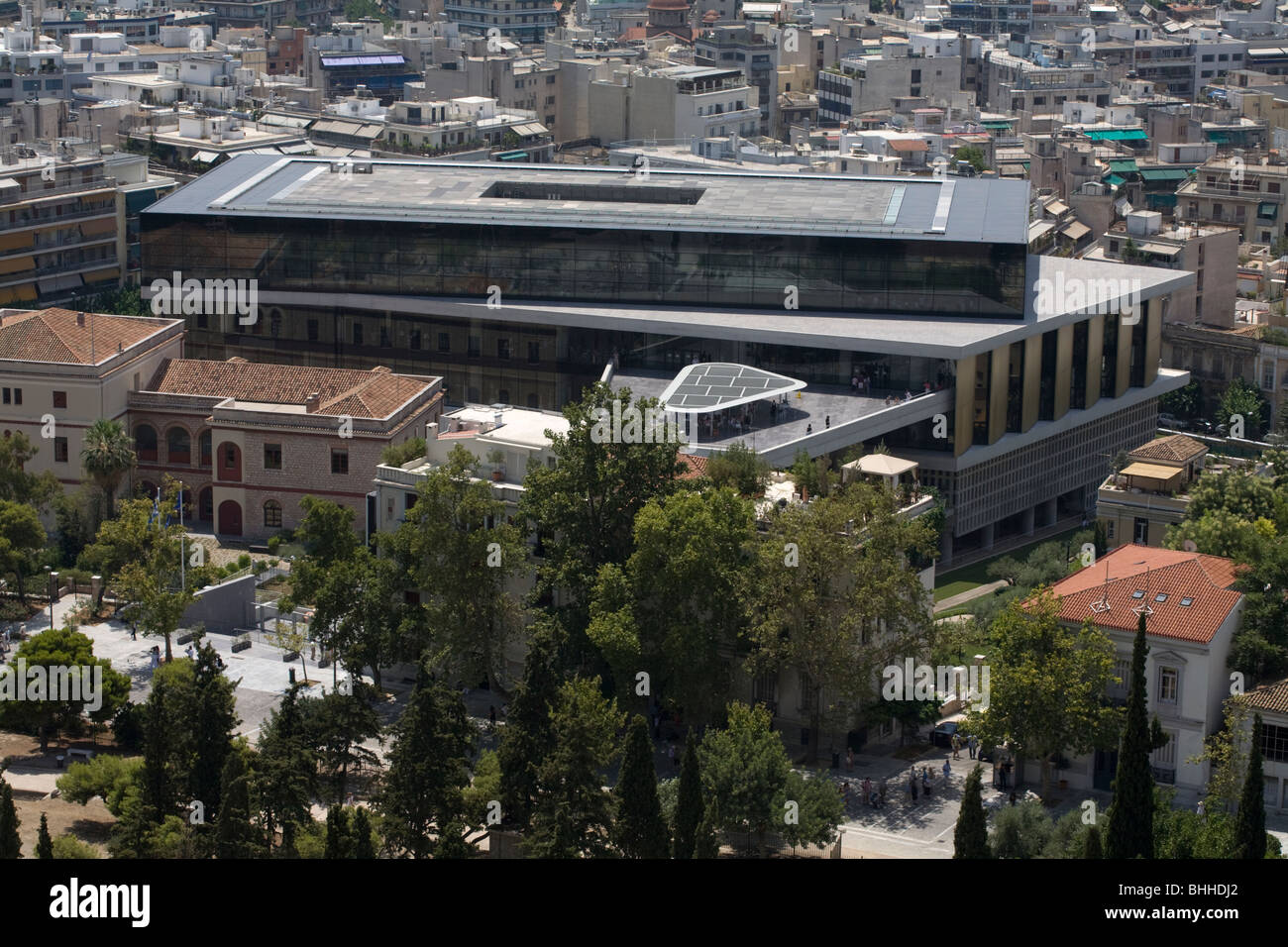
Modern glass-and-concrete museum built directly over active excavations, displaying original Parthenon sculptures and the Caryatid figures. The top-floor gallery is aligned with the Parthenon itself, visible through floor-to-ceiling windows.

Ancient Agora

Ancient Agora

10 min walk

landmark

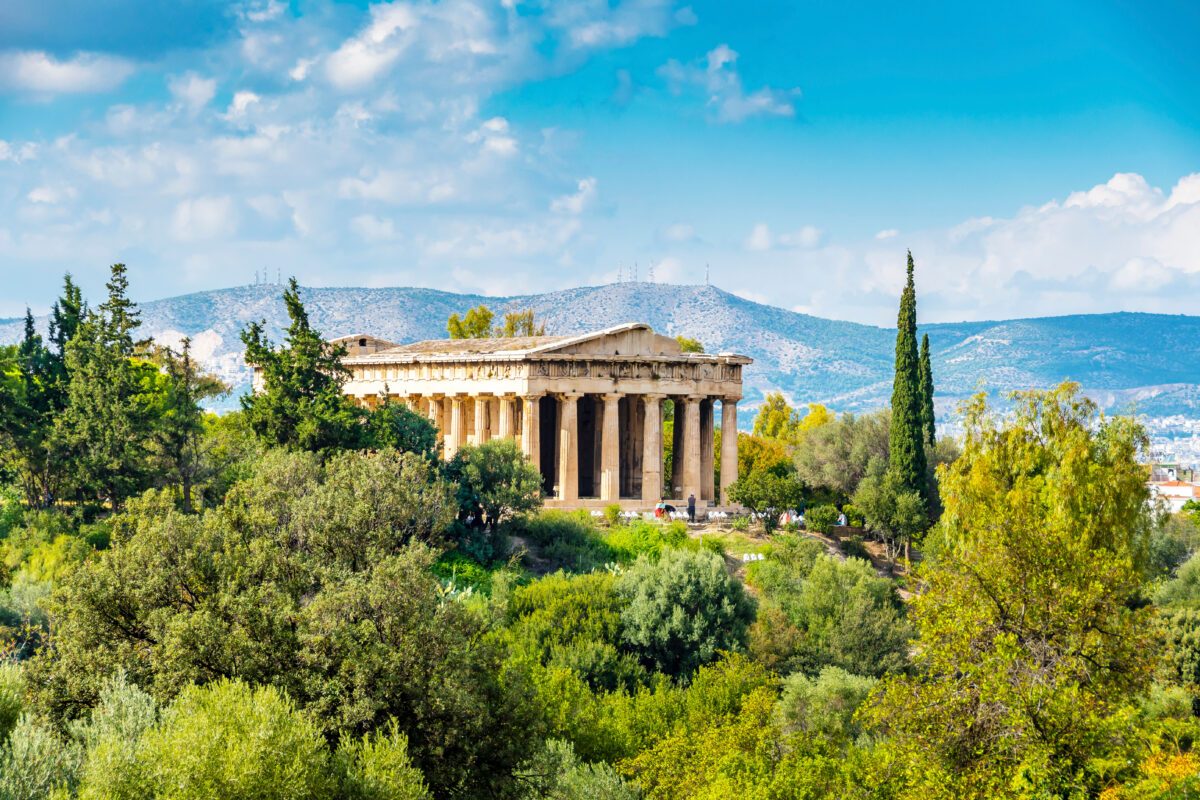
The civic and commercial heart of classical Athens, where Socrates once taught, now scattered with temple ruins and the reconstructed Stoa of Attalos. A shaded, quieter contrast to the bare hilltop above.

Plaka

Plaka

5 min walk

square

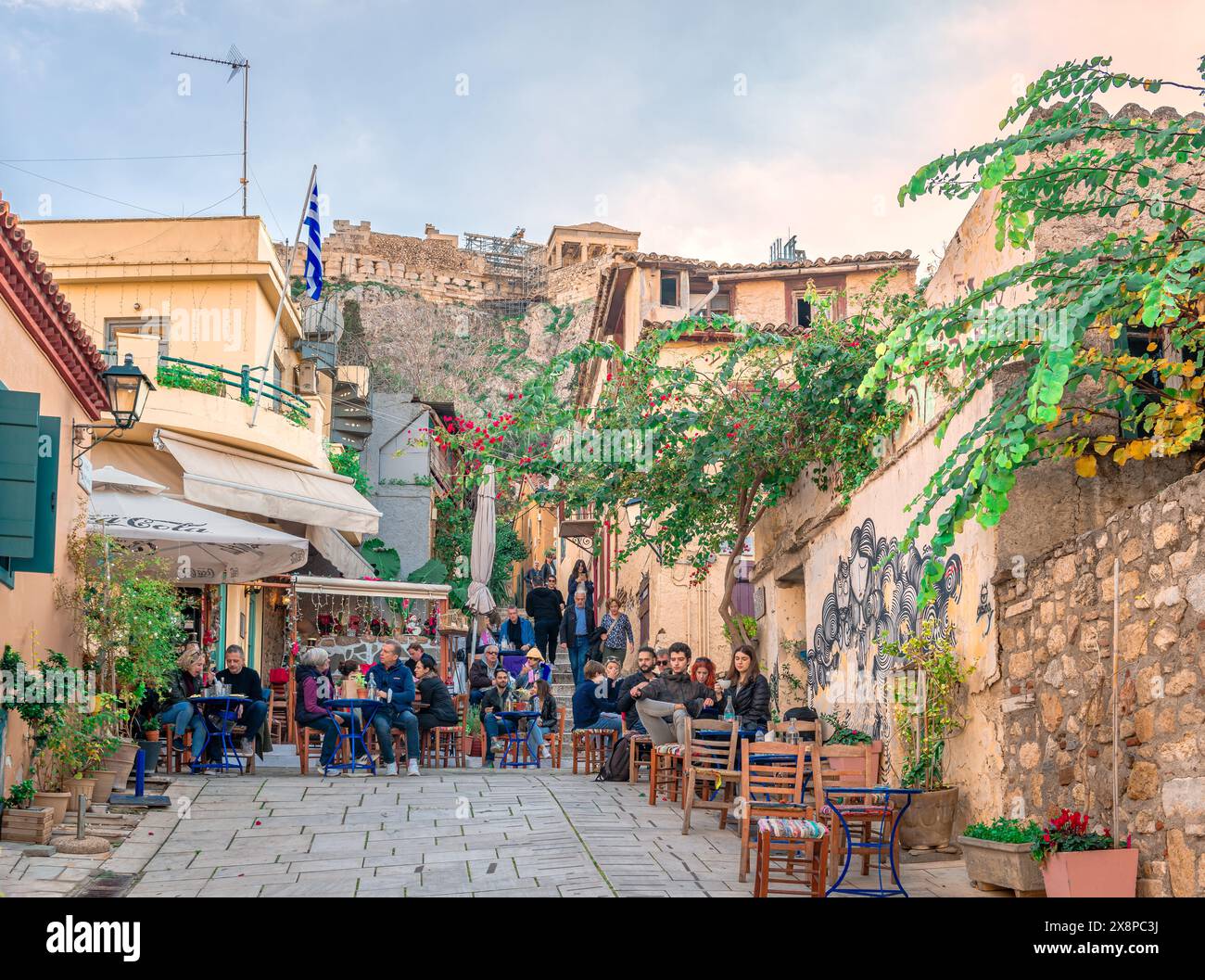
Athens' oldest surviving neighborhood, a maze of narrow pedestrian lanes lined with neoclassical houses, tavernas, and small shops beneath the Acropolis hill.

Areopagus Hill

Areopagus Hill

5 min walk

viewpoint

A bare rock outcrop just west of the Acropolis entrance offering an open panorama over the city and the Agora below, free to climb at any hour.

Temple of Olympian Zeus

Temple of Olympian Zeus

12 min walk

landmark

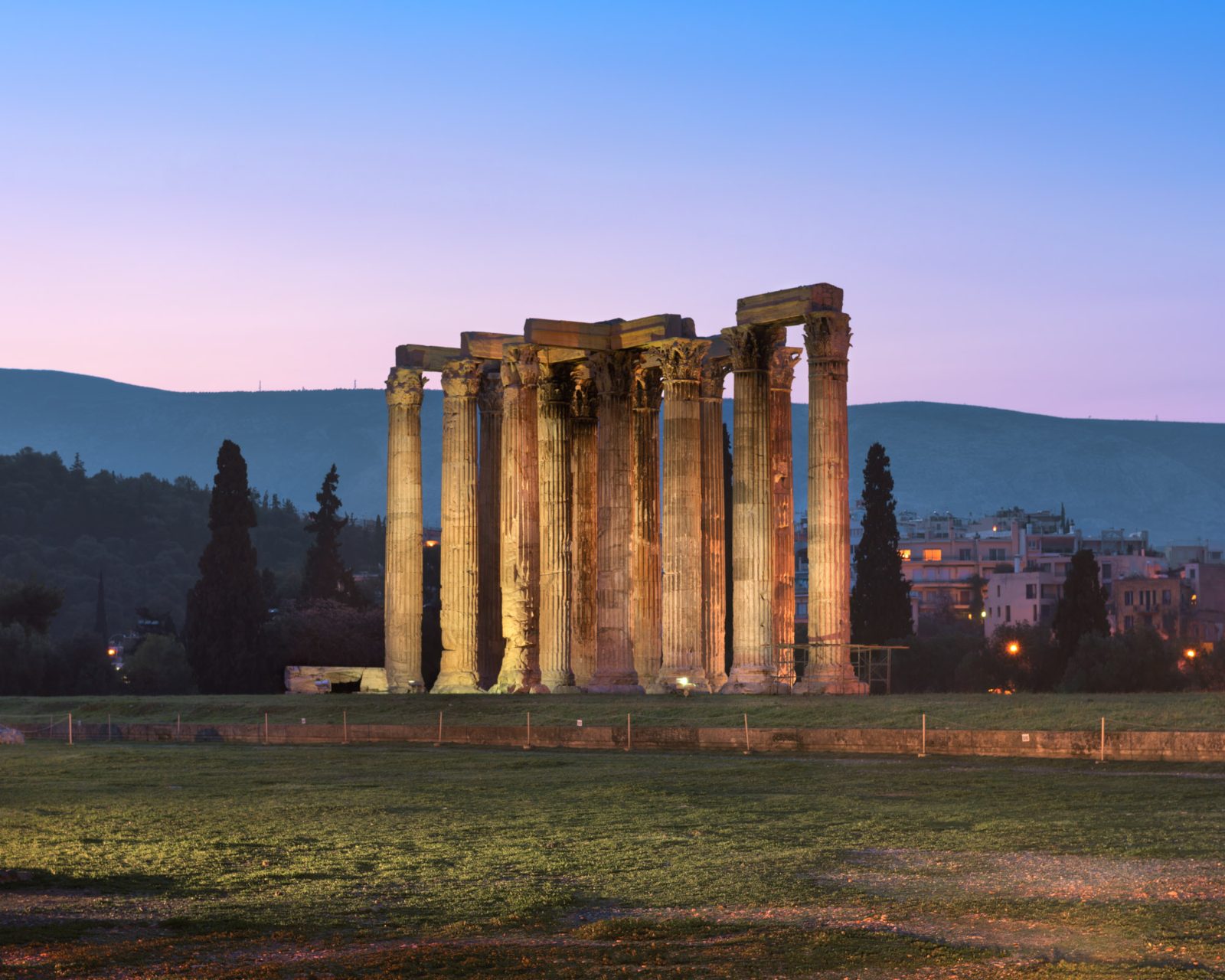
Remains of what was once the largest temple in Greece, with 15 towering Corinthian columns still standing from an original 104.

Lysicrates Monument

Lysicrates Monument

8 min walk

landmark

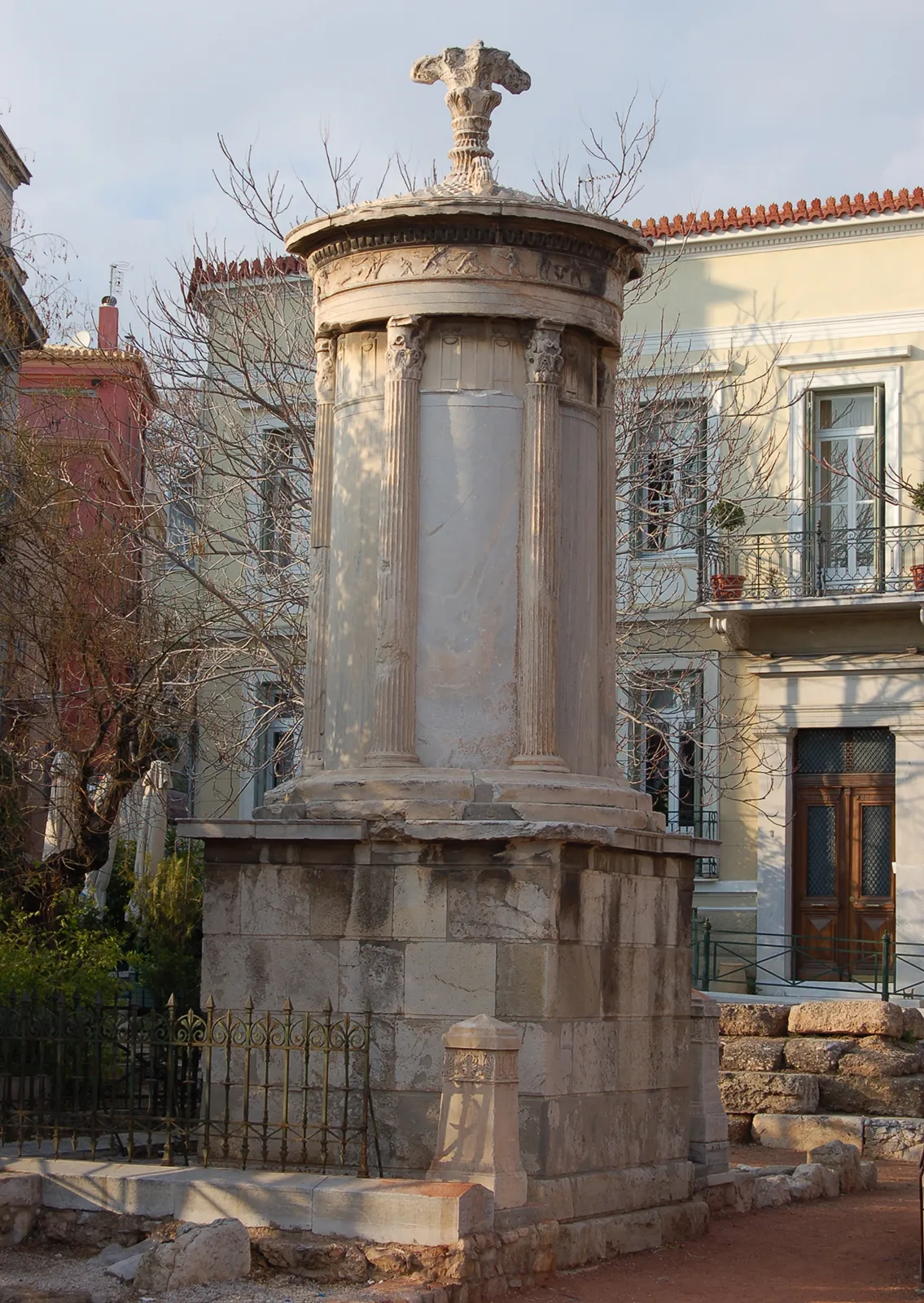
A small circular marble monument from 335 BC in the Plaka, one of the earliest structures using the Corinthian order on its exterior.

Where to stay

Where to stay near Acropolis of Athens

Koukaki district

Koukaki district

5-10 min walk

mid-range

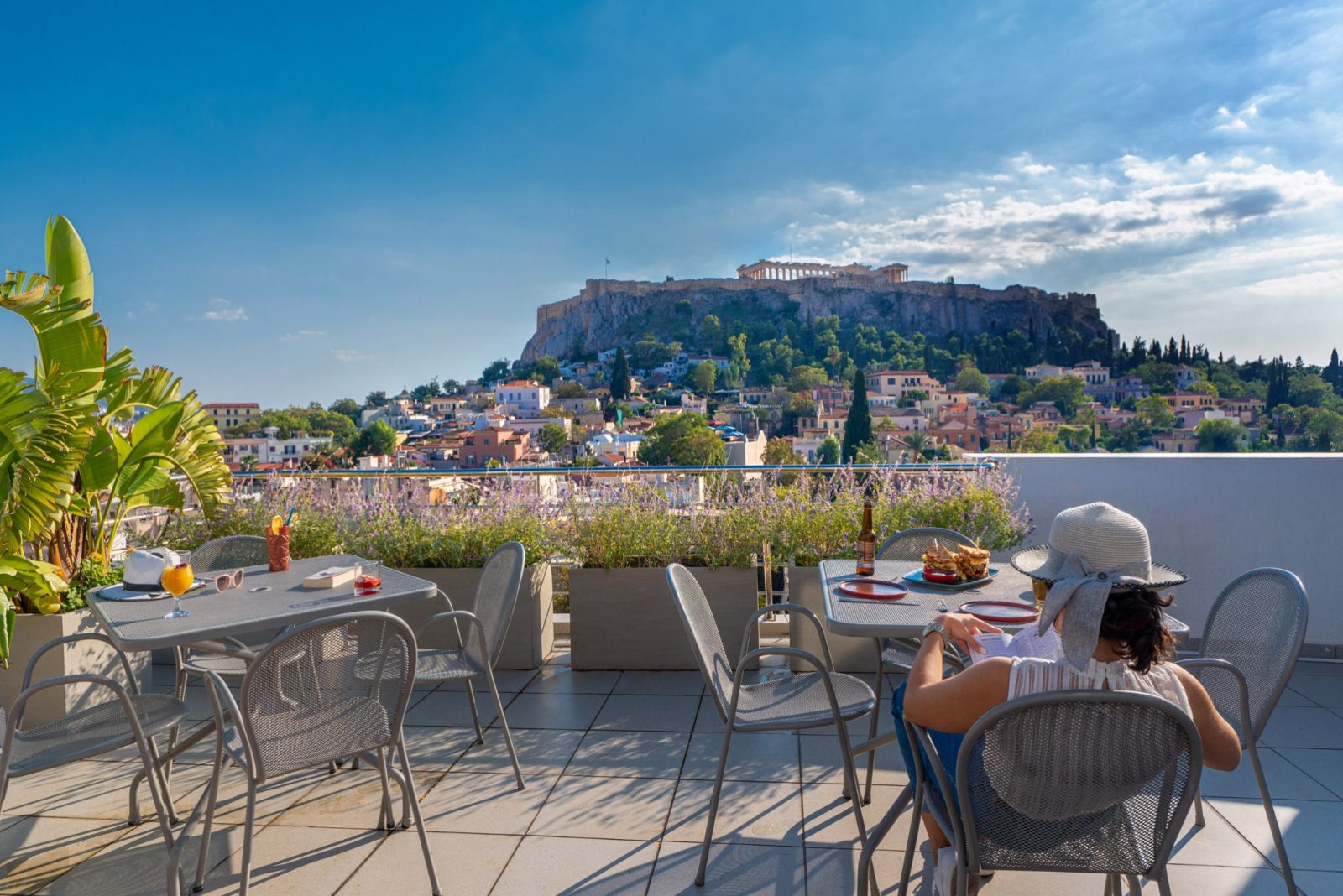
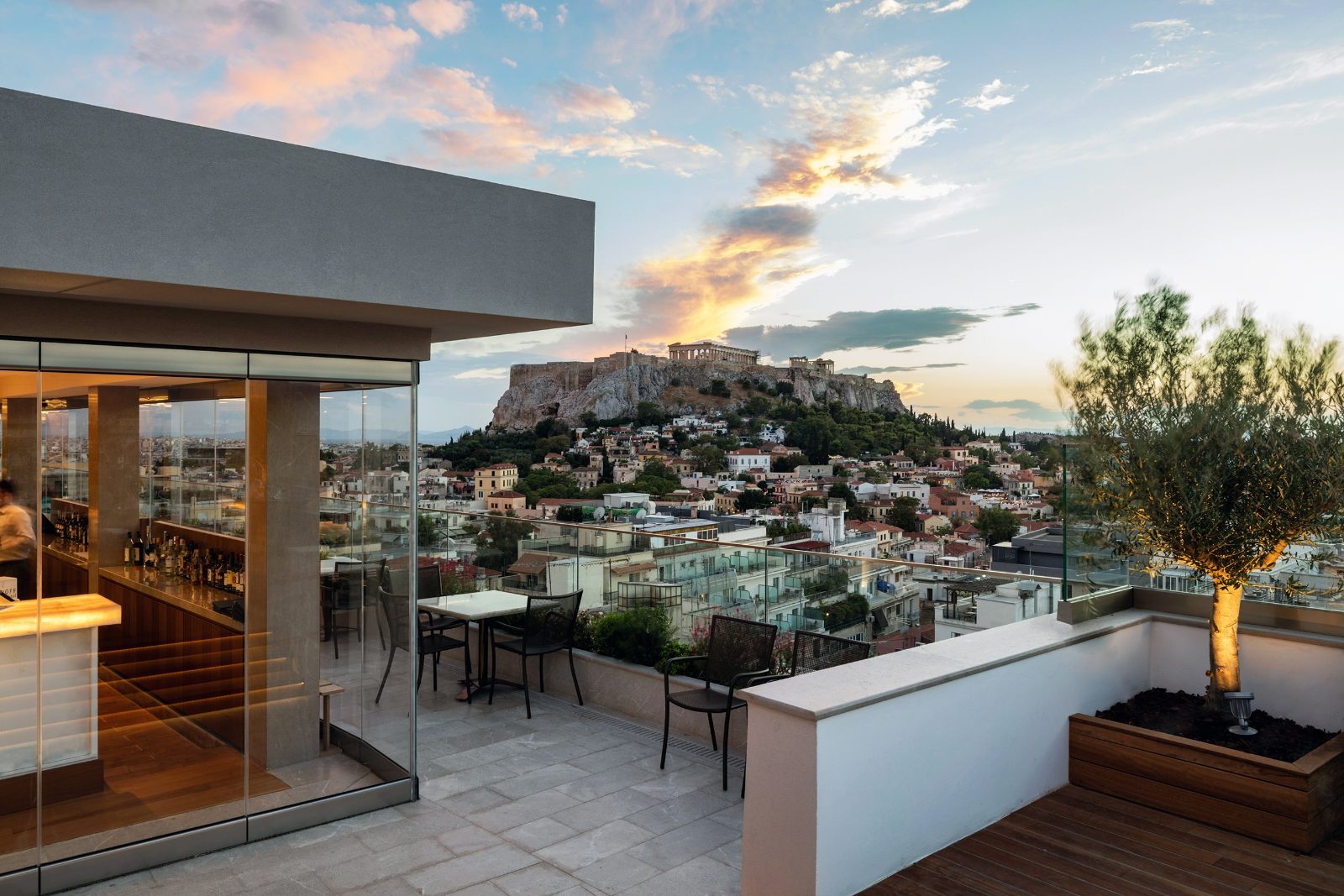
A quiet residential neighborhood south of the hill known for boutique hotels and rooftop bars with direct Acropolis views.

Makrigianni district

Makrigianni district

5 min walk

boutique

Streets bordering the Acropolis Museum with small design-forward hotels within a short walk of both entrance gates.

Plaka district

Plaka district

5-10 min walk

budget

Athens' historic old town offering guesthouses and small family-run hotels among narrow pedestrian lanes.

Syntagma district

Syntagma district

15-20 min walk

luxury

Central Athens hub near the Parliament building with international luxury hotel chains and easy metro access.

Ready for Adventure?

Join thousands of happy travelers who have discovered this incredible experience

Book Your Experience Now